
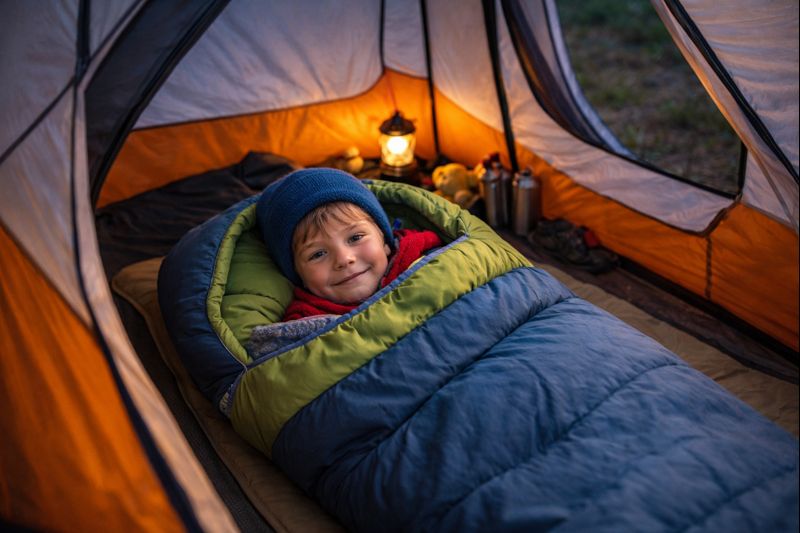
If you’ve ever zipped your kid into a “40-degree” sleeping bag only to hear “I’m cold” at 3 a.m., you’re not alone.
Sleeping bag temperature ratings are confusing enough for adults — and they’re even less reliable for kids. Most ratings are based on adult testers, adult body heat, and adult assumptions that simply don’t apply to children ages 6–10.
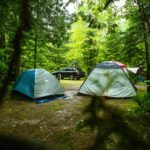
This guide is specifically for family car camping in spring and fall, when nighttime temperatures hover between 40–50°F. We’ll explain what those ratings really mean for kids, which sleeping bags actually work, and how to keep your child warm without overbuying or overheating them.
What 40–50°F Temperature Ratings Really Mean for Kids
Most sleeping bags are tested using EN or ISO standards, which measure survival and comfort levels based on an average adult male wearing base layers and sleeping on a pad.
That’s the problem.
Kids:
- Have less body mass
- Generate less heat
- Lose heat faster through the ground
- Move around more at night
In real-world family camping conditions, a sleeping bag rated to 40°F is often only comfortable for kids at 50–55°F.
👉 Rule of thumb for parents:
Add a 10–15°F warmth buffer when choosing a sleeping bag for children.
If overnight lows are expected to be around 40°F, most kids will sleep better in a 30–40°F rated bag, not a 40–50°F one.
(We explain this in more detail in our guide: Sleeping Bag Temperature Ratings Explained for Families.)
How We Chose the Best Sleeping Bags for Kids (Ages 6–10)
This list isn’t built for backpackers or ultralight enthusiasts. It’s built for real families camping a few weekends a year.
What we prioritized:
- Real-world warmth (not marketing numbers)
- Synthetic insulation (better for damp nights and spills)
- Proper sizing for kids ages 6–10
- Rectangular or semi-rectangular shapes
- Easy zippers kids can manage themselves
- Washability (because… kids)
All of the sleeping bags below are well-suited for car camping, backyard camping, and campground trips where comfort matters more than pack weight.
Best 40–50°F Sleeping Bags for Kids Ages 6–10
🏆Best Overall: Coleman Kids 45°F Sleeping Bag
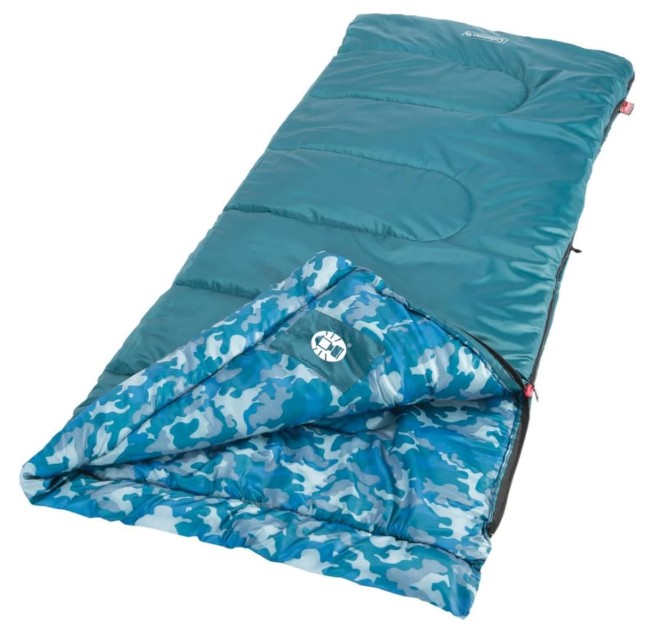
The Coleman Kids 45°F Sleeping Bag hits the sweet spot for most families.
While it’s labeled as a 45-degree bag, it performs best for kids in the 50–60°F range on its own — and can comfortably stretch into the mid-40s when paired with a decent sleeping pad.
Why parents love it:
- Affordable and widely available
- Soft lining that doesn’t feel “plasticky”
- Rectangular shape kids can move in
- Simple, durable zipper
Best for:
Spring and fall car camping, backyard camping, and families who want a reliable, no-stress option.
Reality check:
If your child sleeps cold or you expect temps near 40°F, pair this bag with:
- An insulated sleeping pad (R-value 3+)
- Warm pajamas and socks
🥶 Best for Kids Who Sleep Cold: TETON Sports Celsius Jr Kids Sleeping Bag
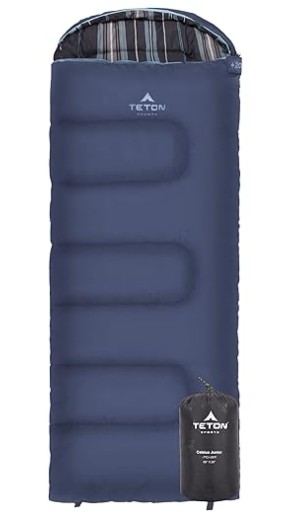
If your child is always the first one cold at night, this is the safest pick.
The TETON Sports Celsius Jr Kids Sleeping Bag is technically a colder-rated bag, but that’s exactly why it works so well for kids camping in the 40–50°F range.
Why it works better than a 40°F bag:
- Extra insulation accounts for kids’ lower heat output
- Semi-rectangular shape balances warmth and comfort
- High-quality fill retains warmth even if damp
Best for:
Kids who sleep cold, shoulder-season camping, or families who camp more than once or twice a year.
💸Best Budget Option: MalloMe Sleeping Bag
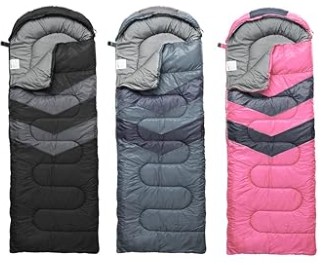
If you’re camping during the warmer end of the 40–50°F range and want to keep costs down, this bag can work — with a few caveats.
On its own, it’s best suited for 50–60°F nights. At 45°F or below, it needs help.
How to make it work:
- Use an insulated sleeping pad
- Dress kids in fleece or wool pajamas
- Add a sleeping bag liner if needed
Best for:
Occasional campers, warmer spring nights, or as a first “starter” sleeping bag.
Not ideal for:
Kids who sleep cold or early spring / late fall trips.
What Size Sleeping Bag Is Best for Kids Ages 6–10?
Size matters more than most parents realize.
A sleeping bag that’s too long creates empty space that your child’s body heat has to warm — and that often leads to cold feet and restless sleep.
General sizing tips:
- Choose a bag that’s no more than 6–8 inches longer than your child’s height
- Adjustable or cinch-style bags are ideal
- Avoid adult sleeping bags unless absolutely necessary
A properly sized kids sleeping bag is almost always warmer than an adult bag, even if the adult bag has a lower temperature rating.
How to Keep Kids Warm in 40–50°F Weather (Even With a Good Sleeping Bag)
A warm night isn’t just about the sleeping bag.
Sleeping Pads Matter More Than You Think
Cold ground pulls heat away fast.
- Look for pads with an R-value of at least 3
- Foam pads work, but insulated air pads are warmer
- Never place a sleeping bag directly on the tent floor
Dress Smart (Not Bulky)
- Skip cotton — it traps moisture and gets cold
- Use fleece or wool pajamas
- Always pack dry socks for sleeping
Easy Warmth Boosters
- A hot water bottle placed near feet before bed
- Sleeping bag liners for extra warmth
- A beanie on cold nights (huge difference)
Common 40–50°F Sleeping Bag Mistakes Parents Make
- Trusting the rating alone
Ratings assume adults — not kids. - Buying oversized bags “to grow into”
Bigger usually means colder. - Skipping the sleeping pad
This is the #1 reason kids wake up cold. - Over-prioritizing lightweight gear
Car camping = comfort first.
Final Recommendation: What Should Most Families Buy?
For most families camping in 40–50°F weather:
- Best all-around: Coleman Kids 45°F Sleeping Bag
- Best for cold sleepers or cooler nights: Kelty Big Dipper 30
- Best long-term value: REI Co-op Kindercone 40
If there’s one takeaway, it’s this:
For kids, it’s usually better to go slightly warmer than the temperature rating suggests.
A well-rested, warm kid means a better trip for everyone.
🔗 Related Reading
- Sleeping Bag Temperature Ratings Explained for Families
- Best Sleeping Pads for Kids Camping in Cool Weather
- How to Build a Warm Family Camping Sleep System
We love writing about the things that make a real difference in your outdoor experience. Some of the links in this post are affiliate links in which case we may earn a small commission at no extra cost to you if you make a purchase. We truly appreciate you taking the time to read our content and hope it has added value to your next camping and outdoor adventure.