
When people ask whether tent camping or RV camping is better for families, I always feel like the question misses the point.
We don’t choose tent or RV.
We choose the right setup for the trip we’re taking.
Over the years, we’ve camped as a family in everything from simple walk-in tent sites to full-hookup RV campgrounds. Both have their place. Both can be amazing. And both can be miserable if you use them at the wrong time.
This article isn’t about declaring a winner. It’s about how our family actually decides tent vs RV camping before every trip — and how you can make the same call with confidence.
- Why Tent vs RV Camping Isn’t an Either-Or Decision
- The Question We Ask Before Every Camping Trip
- 1. How Long Is the Trip?
- 2. Where Are We Camping?
- 3. What’s the Weather Forecast?
- 4. How Much Energy Do We Have?
- 5. What Kind of Experience Do We Want?
- 6. Tent vs RV Camping With Kids: A Real Comparison
- 7. Cost Considerations for Families
- Our Family’s Rule of Thumb
- Final Thoughts: The Best Camping Choice Is the One That Gets You Outside
Why Tent vs RV Camping Isn’t an Either-Or Decision
For families, camping styles change constantly:
- kids get older
- schedules get busier
- weather tolerance shifts
- energy levels fluctuate
Some trips call for simplicity and adventure. Others call for comfort and convenience.
Once we stopped asking “Which is better?” and started asking “What does this trip need?”, camping got a lot more enjoyable.
The Question We Ask Before Every Camping Trip
Before we book a site or load gear, we walk through the same few questions. The answers almost always make the decision clear.
1. How Long Is the Trip?
When We Choose Tent Camping
Tent camping works best for:
- 1–2 night trips
- quick weekend getaways
- local campgrounds close to home
For short trips, setting up a tent feels fun, not exhausting. You arrive, pitch camp, enjoy the evening, sleep, and head home without feeling like teardown stole half your weekend.
When We Choose RV Camping
RV camping shines for:
- 3+ night trips
- long weekends
- multi-stop itineraries
Being able to set up once, leave beds made, and store food properly makes longer trips far more relaxing for families.
Rule of thumb:
Short trip = tent
Longer trip = RV
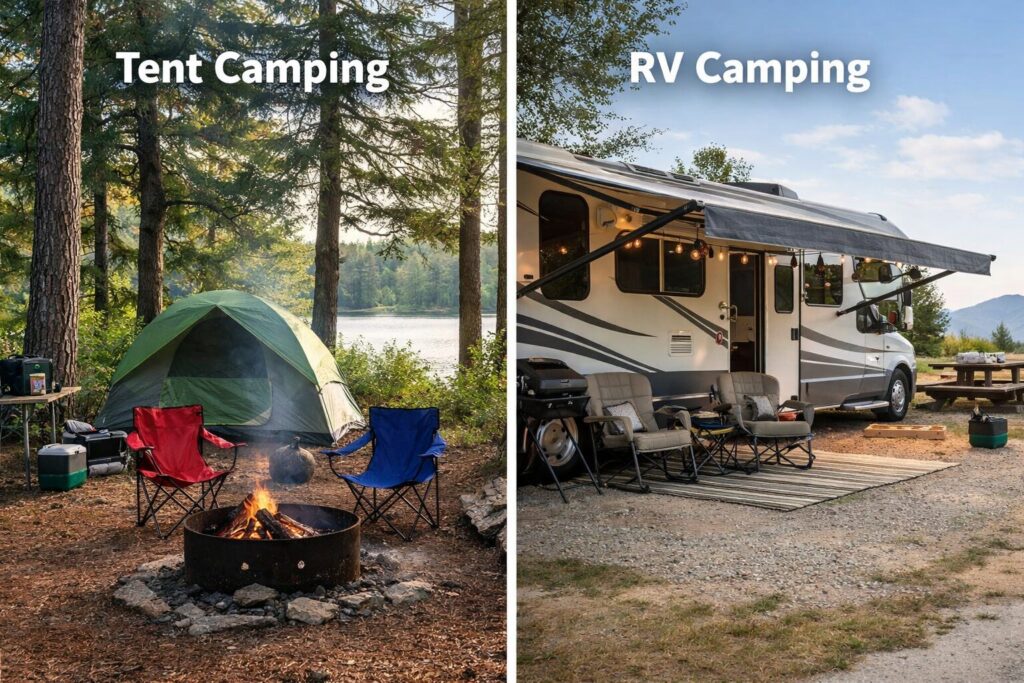
2. Where Are We Camping?
Location matters more than almost anything else.
Tent Camping Makes Sense When:
- campsites are small or wooded
- the campground is rustic or walk-in
- hookups aren’t available anyway
- we want to feel immersed in nature
Some of the best family memories happen in places an RV simply can’t reach.
RV Camping Makes Sense When:
- campgrounds are designed for RVs
- hookups are available
- sites are spread out or exposed
- we’re staying somewhere popular or busy
In RV-focused campgrounds, tent camping can actually feel harder and less enjoyable.
3. What’s the Weather Forecast?
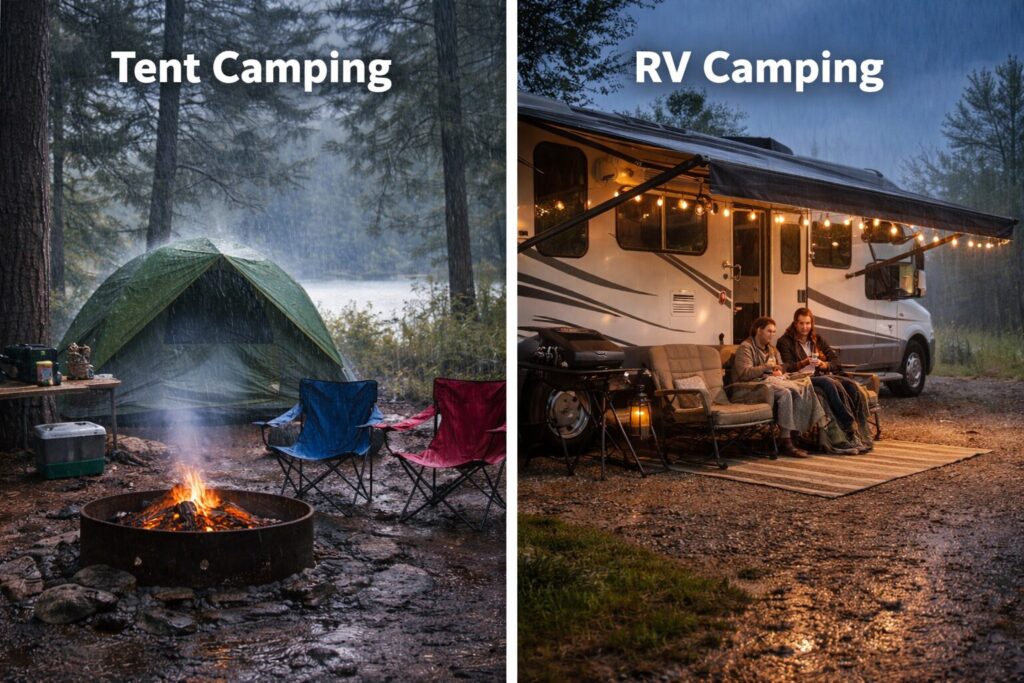
Weather is often the deciding factor.
Tent Camping Works Best When:
- temperatures are mild
- rain chances are low
- conditions are predictable
Good weather turns tent camping into a joy. Bad weather turns it into survival mode.
RV Camping Is Better When:
- extreme heat or cold is expected
- multi-day rain is likely
- shoulder-season camping is planned
An RV gives families insulation, heating, cooling, and a dry place to regroup — which can save a trip from turning sour.
If the forecast feels risky, we almost always choose the RV.
Always make sure to check the weather, no matter where and when you plan to camp.
Weather in the United States of America
4. How Much Energy Do We Have?
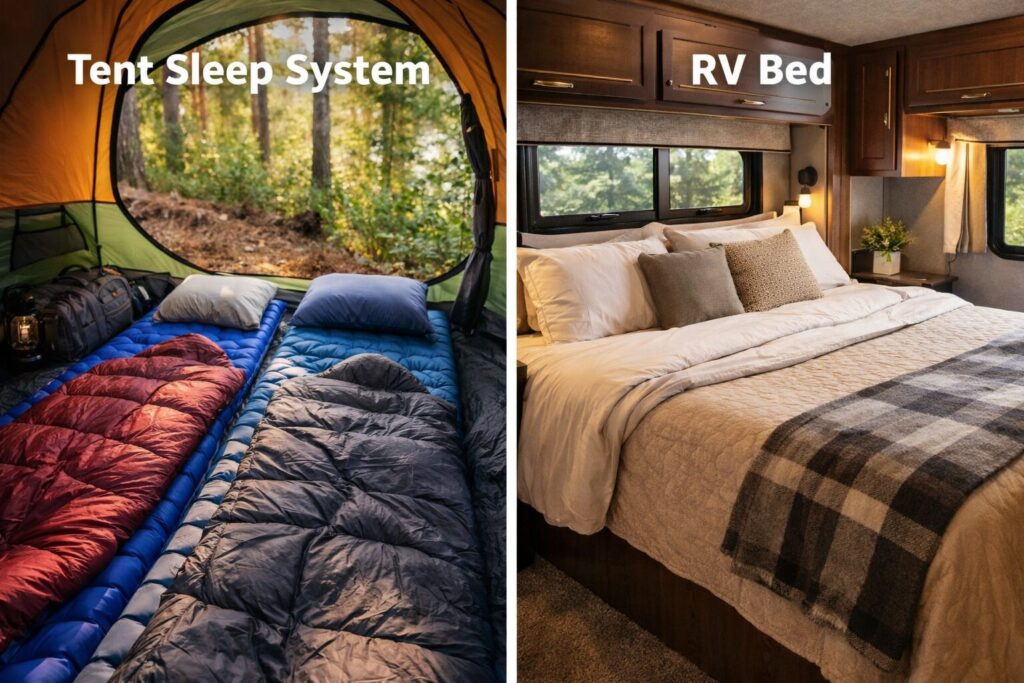
This one is surprisingly important for families.
We Tent Camp When:
- everyone is excited
- we’re coming off a lighter week
- setup feels like part of the adventure
We RV Camp When:
- the week before was exhausting
- arrival will be late
- patience is already thin
RV camping removes friction. Less setup. Easier meals. Faster bedtime. Sometimes that’s exactly what a family needs.
Check out our guide to camp cooking, whether you’re tent camping or camping in an RV.
5. What Kind of Experience Do We Want?
This is where tent vs RV camping really diverges.
Tent Camping Feels Like:
- unplugging
- slowing down
- being closer to nature
- doing more together
It’s simple, immersive, and grounding — especially for kids.
RV Camping Feels Like:
- easier mornings
- better sleep
- quicker meals
- smoother routines
It’s still camping, just with fewer daily obstacles.
Some trips call for adventure. Others call for comfort. Neither is wrong.
Check out his guide about how we always make sure to prioritize sleep while camping.
6. Tent vs RV Camping With Kids: A Real Comparison
| Factor | Tent Camping | RV Camping |
|---|---|---|
| Setup time | Longer | Minimal |
| Sleep comfort | Depends on gear | Consistent |
| Weather protection | Limited | Excellent |
| Cooking | Basic | Full kitchen |
| Bathroom access | Camp facilities | Onboard |
| Cost per trip | Lower | Higher |
| Adventure feel | High | Moderate |
| Stress level | Can vary | Generally lower |
7. Cost Considerations for Families
Tent camping is usually cheaper per trip:
- lower campground fees
- less fuel cost
- minimal maintenance
RV camping costs more:
- fuel
- campground hookups
- maintenance and storage
However, RV trips often allow families to:
- stay longer
- cook all meals
- avoid hotels entirely
Over time, both styles can make financial sense depending on how often you camp.
Our Family’s Rule of Thumb
After years of trial and error, here’s what usually works for us:
We Choose Tent Camping When:
- the trip is short
- weather looks great
- the campground is rustic
- we want a simple, outdoorsy experience
We Choose RV Camping When:
- the trip is longer
- weather is unpredictable
- travel distance is far
- comfort matters more than novelty
This simple framework removes decision fatigue and keeps expectations realistic.
No matter which way we choose to camp, we always follow leave no trace principals.
Final Thoughts: The Best Camping Choice Is the One That Gets You Outside
Tent vs RV camping for families isn’t about choosing sides. It’s about choosing what helps your family enjoy the trip the most.
Some seasons of life lean heavily toward tents. Others lean toward RVs. The real win is having the flexibility to say yes to more trips, more memories, and more time outdoors.
Because the best camping setup isn’t the one that looks coolest online —
it’s the one that works this weekend.