
Whether you are tent camping or RV camping, few camping experiences are as cozy as sitting around a warm campfire with your family. The crackle of the wood, the glow of the flames, and the smell of dinner cooking over the fire are part of what makes camping special.
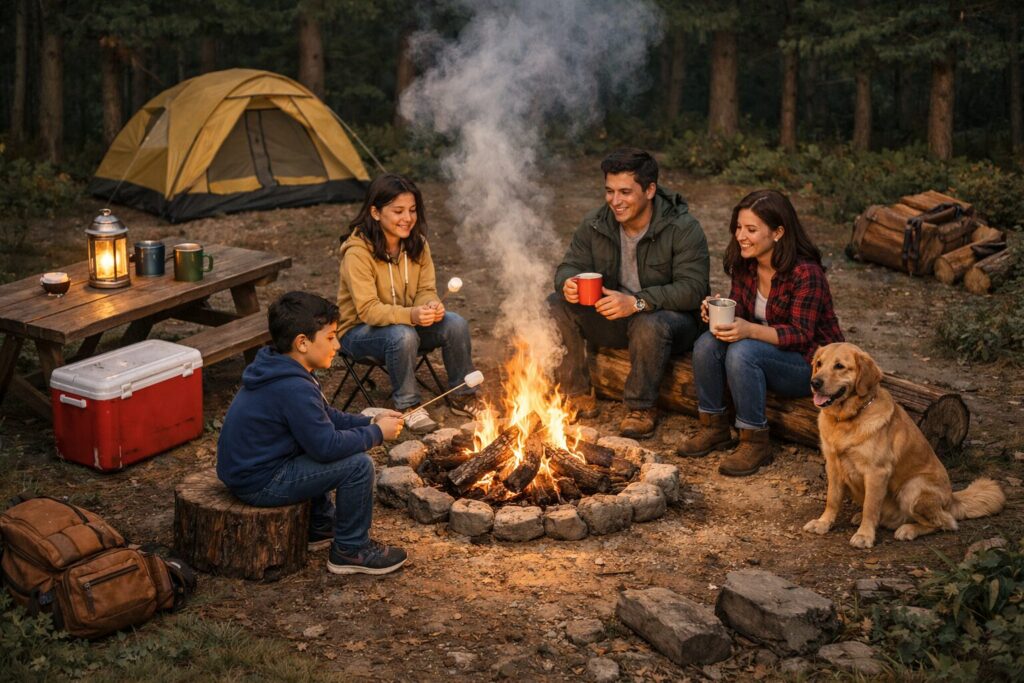
But sometimes that perfect campfire turns into something else entirely.
The fire starts smoking heavily, everyone keeps moving their chairs to escape the smoke, and suddenly the kids are coughing while their clothes smell like they slept inside a chimney.
If you’ve ever wondered why your campfire gets so smoky—and how to stop it, then welcome to camping.
The good news is that smoky fires are usually caused by a few simple issues that are easy to fix with the right experience and can get you back to cooking over a clean fire in no time.
Let’s walk through the most common reasons campfires smoke and how to build a cleaner, more enjoyable fire at your campsite that will have the whole family in awe.
- Why Campfires Get Smoky
- 9 Simple Ways to Stop a Smoky Campfire
- 1. Use Dry, Seasoned Firewood
- 2. Start Your Campfire Small and Hot
- 3. Improve Airflow in Your Campfire
- 4. Don’t Add Too Much Wood at Once
- 5. Choose the Right Type of Wood
- 6. Keep Wet Wood Out of the Fire
- 7. Build Your Fire on a Dry Base
- 8. Let the Fire Burn Down to Coals
- 9. Adjust Your Seating Based on the Wind
- Why Campfire Smoke Always Seems to Follow You
Why Campfires Get Smoky
Before fixing a smoky fire, it helps to understand what causes it.
Campfire smoke is usually the result of incomplete combustion. In simple terms, the wood isn’t burning hot or clean enough, so it releases more smoke particles into the air.
This usually happens because of:
- Wet or green firewood
- Fires that aren’t hot enough
- Poor airflow
- Too much wood at once
- Damp ground conditions
Luckily, each of these problems has an easy solution.
9 Simple Ways to Stop a Smoky Campfire
1. Use Dry, Seasoned Firewood
This is the number one reason campfires smoke.
Freshly cut or damp wood contains a lot of moisture. When it burns, the water inside the wood turns to steam and creates thick smoke.
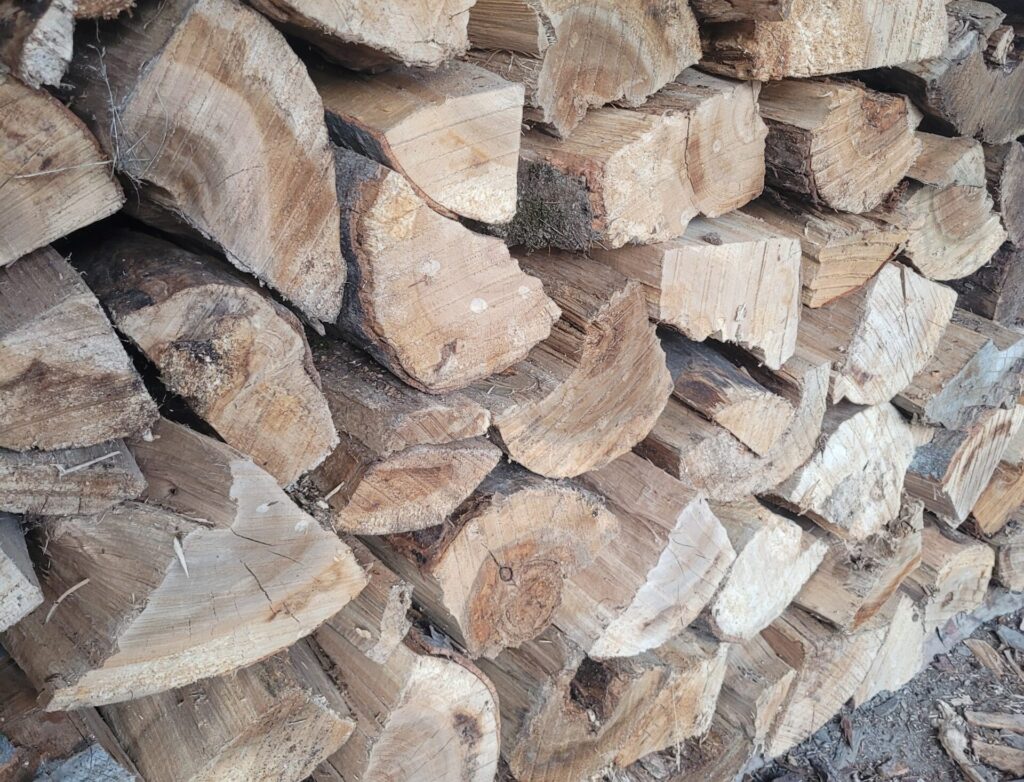
Look for seasoned firewood, which has been dried for at least 6–12 months.
Signs of good firewood include:
- Cracks in the ends of the logs
- Bark that easily peels off
- A hollow sound when two pieces knock together
- Lightweight pieces compared to fresh wood
- A greyish color on the outside
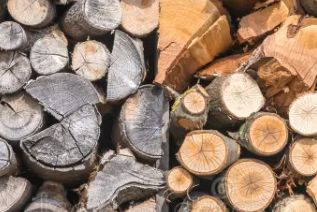
If you’re buying firewood at a campground, ask for dry hardwood if possible. Softwoods burn fast and very hot and are great for kindling, but hardwoods give you that long warm burn to keep the fire going for a long time.
2. Start Your Campfire Small and Hot
Many campers try to build a big fire immediately, which often leads to smoke.
Instead, begin with:
- Dry tinder (paper, birch bark, or fire starters)
- Small kindling sticks
- Gradually add larger wood
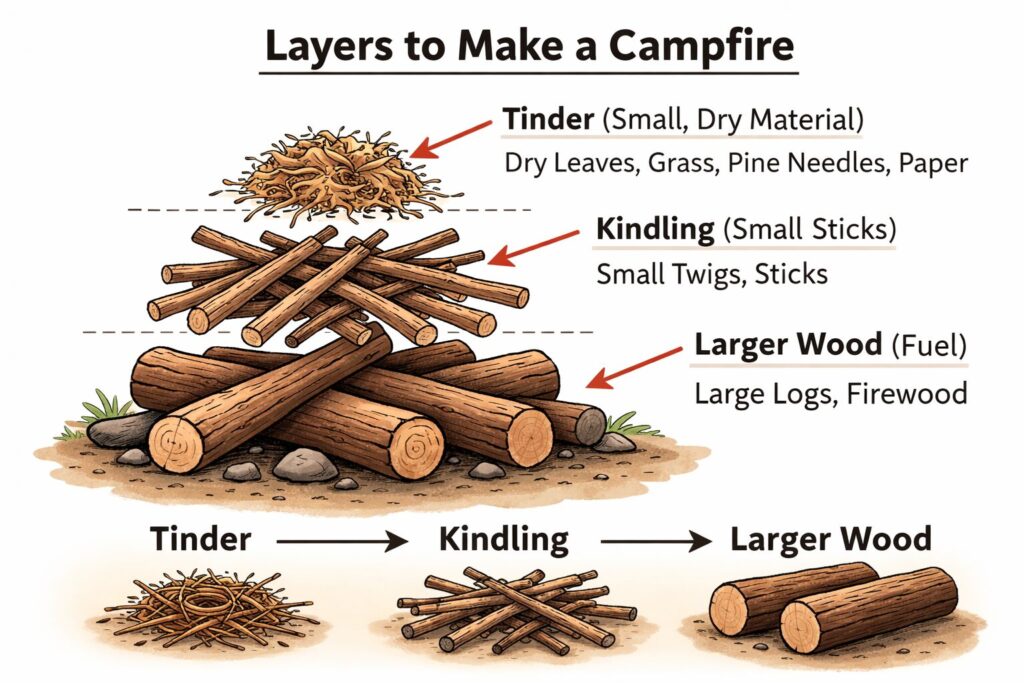
A small, hot fire burns cleaner than a big, smoldering pile of logs.
Once your fire has a strong bed of coals, you can slowly add larger pieces.
3. Improve Airflow in Your Campfire
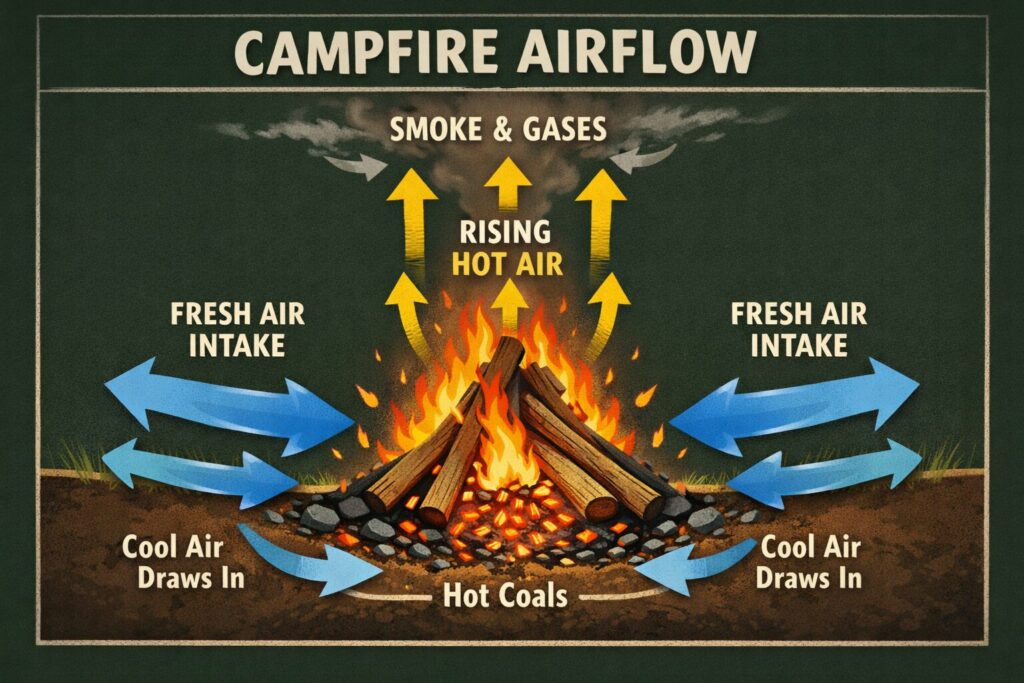
Fire needs oxygen to burn efficiently.
If your logs are packed too tightly, airflow gets restricted and the fire starts producing smoke. Airflow needs to be good at the base of the fire which is sometimes hard to accomplish with a metal fire ring in place. If you’re having trouble, try propping one end of the fire ring up off the ground to promote air flow.
Try the classic teepee or log cabin fire layout:
Teepee Fire
Kindling leaned together in a cone shape that allows air to flow through the center.
Log Cabin Fire
Larger logs stacked in a square pattern with kindling inside.
Both designs help oxygen feed the flames and reduce smoke.
4. Don’t Add Too Much Wood at Once
Another common mistake is dumping several logs onto the fire at the same time.
When too much wood is added, the fire cools down and starts smoldering instead of burning cleanly.
Instead:
- Add one or two logs at a time
- Wait until they catch fire before adding more
- Keep the flame active
Think of a campfire like a camp stove — steady fuel works better than overload.
5. Choose the Right Type of Wood
Some woods naturally burn cleaner than others.
Hardwoods tend to produce less smoke and longer-lasting coals.
Good campfire woods include:
- Oak
- Maple
- Ash
- Birch
- Beech
Softer woods like pine or spruce ignite easily but can produce more smoke and sparks.
They’re great for starting fires, but hardwoods are better for maintaining a clean burn.
6. Keep Wet Wood Out of the Fire
Even seasoned firewood can get damp from rain or dew overnight.
Before lighting your fire, check the wood pile.
Avoid pieces that:
- Feel wet or heavy
- Have moss or rot
- Were sitting directly on the ground
If wood is slightly damp, place it near the fire for a while to dry before burning it. If the weather is going to be rainy, cover your firewood with a tarp to keep it dry.
7. Build Your Fire on a Dry Base
If the ground under your fire pit is wet, the moisture can contribute to smoke.
Many campgrounds already have established fire rings, but if you’re building your own fire:
- Use dry soil or sand underneath
- Avoid building fires on wet grass
- Raise the wood slightly using small sticks
A dry base helps the fire burn hotter and cleaner. If the ground is wet, scrape down to some dry land.
8. Let the Fire Burn Down to Coals
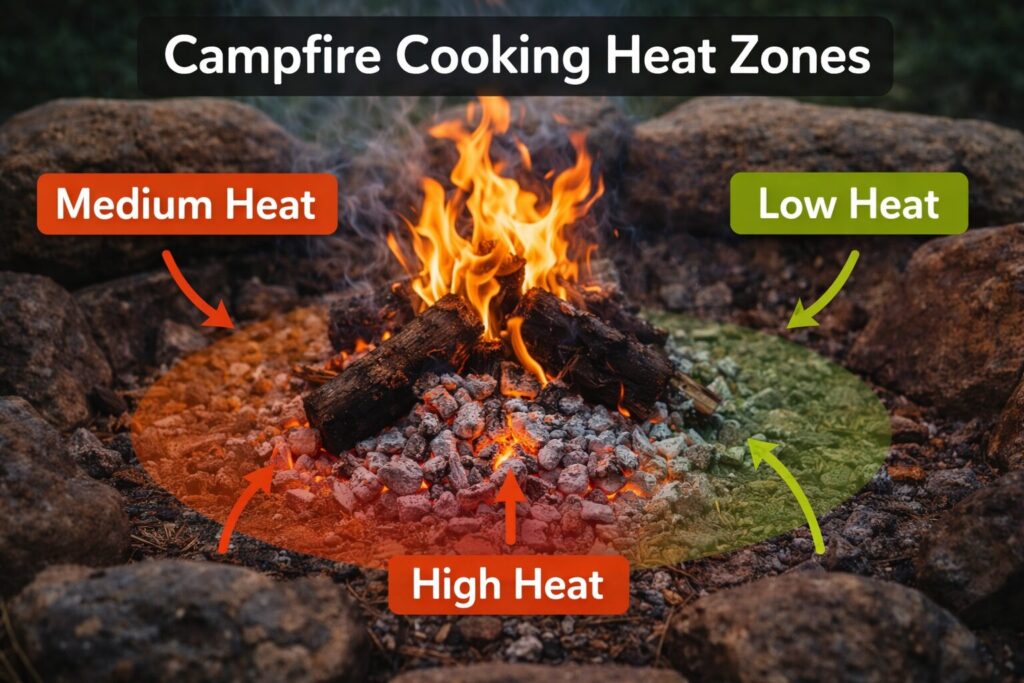
Once your fire is well established, the cleanest heat usually comes from glowing coals rather than tall flames.
This is especially true for camp cooking.
Coals produce:
- Less smoke
- More consistent heat
- Better cooking conditions
If your fire is smoky, let it burn down for a while before adding more wood.
9. Adjust Your Seating Based on the Wind
Even a well-built fire will produce some smoke.
Wind direction plays a big role in where that smoke travels.
A simple trick many campers use:
Position your chairs upwind of the fire.
This way the smoke naturally blows away from the group instead of toward it.
And if the wind changes (which it often does), just rotate your chairs instead of chasing the smoke around the fire pit all night.
Why Campfire Smoke Always Seems to Follow You
Many campers swear that campfire smoke has a personal vendetta against them.
In reality, it’s mostly about airflow and body heat.
Your body creates rising warm air that can pull smoke in your direction. Combined with shifting wind patterns, this makes it feel like the smoke is constantly chasing you around the fire.
While it might feel like bad luck, it’s really just physics at work.
Bonus Tip: Don’t Make Your Fire Bigger Than Necessary
A common misconception is that bigger fires are better.
In reality, large fires often:
- Produce more smoke
- Burn wood inefficiently
- Become harder to manage
For most family campsites, a fire about knee-high or smaller is perfect for warmth, cooking, and atmosphere.
It also keeps the smoke under control.
Final Thoughts on Smoky Campfires
A smoky campfire can quickly ruin an otherwise perfect evening at the campsite. But the good news is that most smoky fires are caused by simple problems that are easy to fix.
By using dry wood, good airflow, and smaller hotter fires, you can enjoy a cleaner burn that keeps the focus on roasting marshmallows and sharing stories instead of constantly dodging smoke.
With a little practice, you’ll be able to build a campfire that burns bright, warm, and mostly smoke-free — just the way camping nights are meant to be.