
Tent camping with your family should feel like an adventure, not a logistical nightmare. But when it comes to the camp kitchen, most families fall into one of two traps: they pack way too much, or they forget something critical and end up eating cold hot dogs straight from the package.
The good news? A great camp kitchen doesn’t require a lot of gear — just the right gear.
This guide breaks down the essential camp cooking gear for tent camping, with a focus on simple, practical setups that actually work for families. This guide doesn’t dive into the extras and nice-to-haves, but we’ll get to that in a later post.
Whether you’re heading to a provincial park or a national campground, this guide will help you build a stress-free camp kitchen without overcomplicating things.
Why Tent Camping Is Different
When you’re sleeping under canvas, you don’t have the luxuries of an RV — no built-in stovetop, no running water, no fridge humming away in the corner. Everything you cook with needs to be packed, set up, used, cleaned, and packed again. That reality shapes every decision you make about gear.
We explore the differences between RV and tent camping in this post and when we choose each.
The goal isn’t to recreate your home kitchen in the woods. It’s to build a simple, portable cooking station that feeds your family without making you miserable. Keep that in mind as you read through this guide.
Camp Cooking Gear that is a must
This guide gives you the absolutely essential gear for cooking for your family while tent camping in the woods. We’re leaving all of the non-essential stuff out of this for another day.
You’re here for cooking, but that’s not the only thing you need to consider when planning a family camping trip. Here are 12 items you absolutely need to start camping.
Your Camp Stove
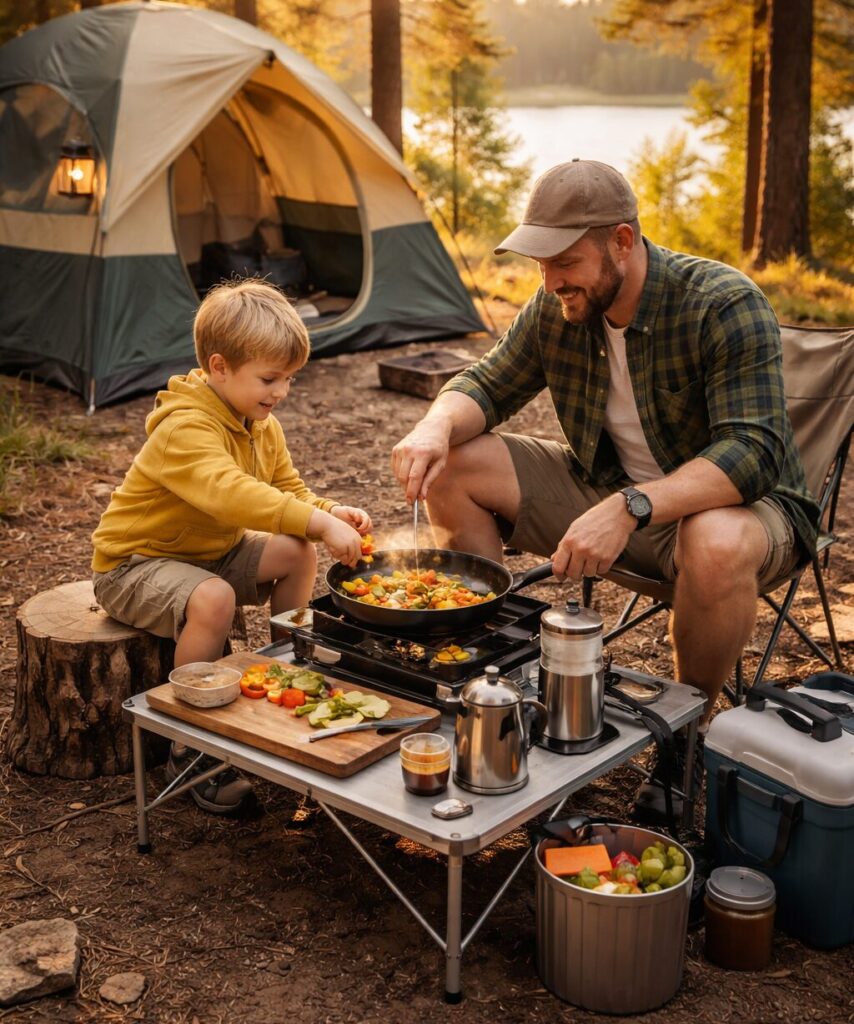
If there’s one item worth spending money on, it’s this. A reliable 2-burner propane stove gives you enough flexibility to cook a real meal — eggs and bacon on one burner, coffee heating on the other — without the unpredictability of a campfire. Popular choices like the Coleman Classic, Camp Chef Everest 2X, or Eureka Ignite Plus have earned their reputation because they just work. Look for something with wind guards, adjustable flame control, and a stable base.
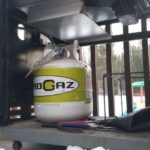
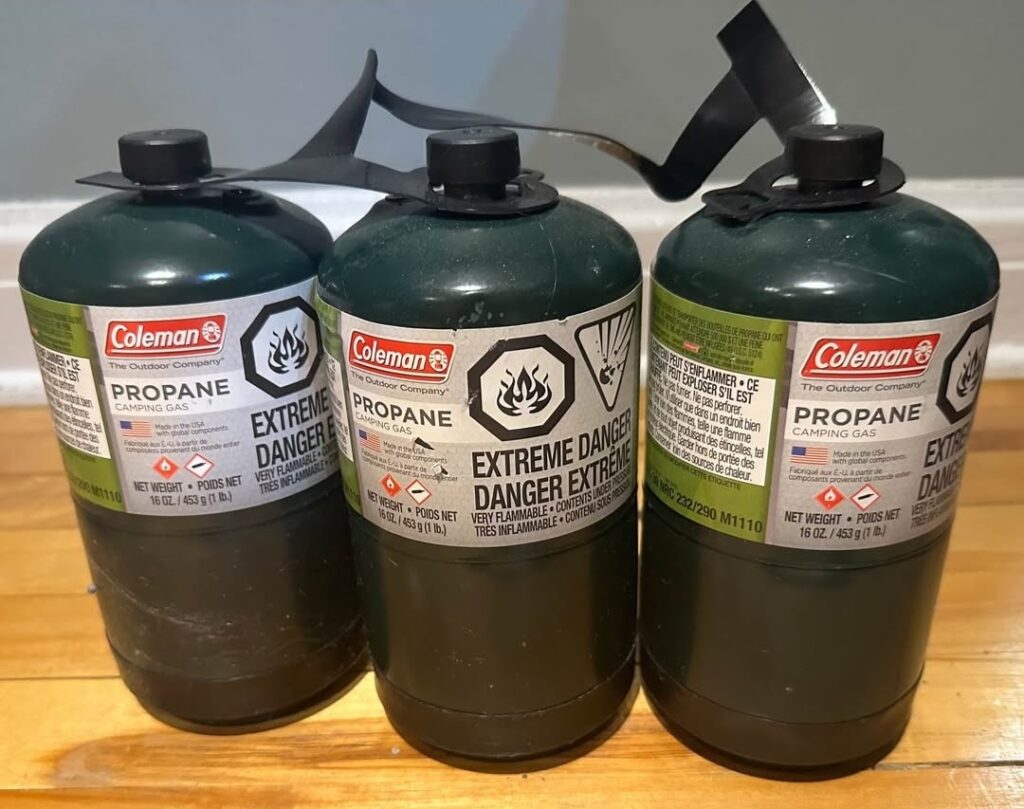
One non-negotiable: always bring an extra propane cylinder. Running out mid-meal is a rite of passage no one needs.
Camp Cookware
Resist the urge to pack your entire kitchen cabinet. For most family meals, you really only need a large frying pan (cast iron or non-stick), a medium pot for pasta or soup, and optionally a kettle if you’re a hot drink person. A compact nesting set can keep things tidy if you’d rather not mix and match. Just leave the glass cookware and heavy full-size pots at home — they’ll make you regret every step from the car to the campsite.
Your Cooler (It’s Your Fridge)
A well-managed cooler can keep food cold for three to five days, which covers most camping trips easily. Higher-end options like the YETI Tundra 45 or Coleman Xtreme 5 hold ice noticeably longer than budget coolers. Families often do well with two coolers — one dedicated to drinks (which gets opened constantly) and one for food (which stays sealed as much as possible). Pre-chill your cooler before packing, keep it in the shade, and consider freezing some meals ahead of time to serve double duty as ice blocks.
Food Prep Basics
Think of this as your kitchen drawer, condensed. A cutting board, a sharp knife with a sheath, tongs, a spatula, and a can opener cover the vast majority of camp cooking scenarios. A ladle is worth tossing in if you plan on making soup or chili. Store everything together in a labeled plastic tote — “Camp Kitchen” — so setup at the campsite takes minutes, not a frantic rummage through bags.
A Prep Surface
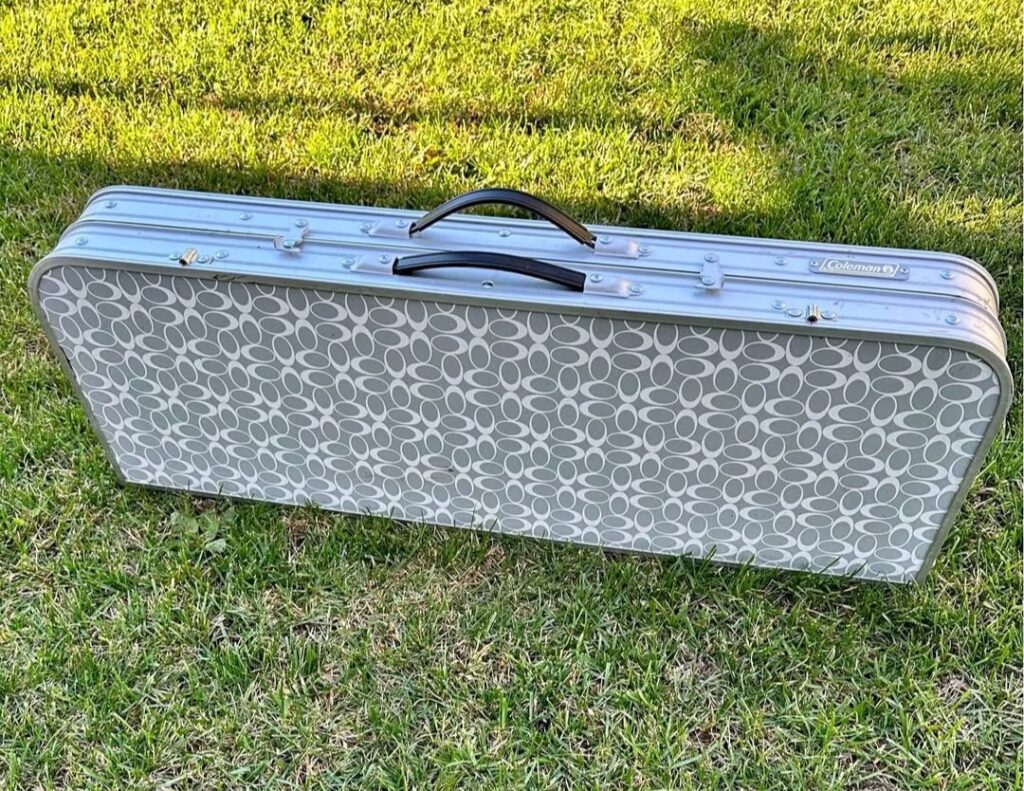
Many campsite picnic tables are awkward sizes or already claimed by the family next door. A folding aluminum table or a lightweight roll-top camp table gives you a dedicated cooking zone, which makes a surprisingly big difference when you’ve got kids underfoot and a hot stove going. Look for something with adjustable height if you want to spare your back.
The Dishwashing Station
Cleanup is where camp cooking tends to fall apart, especially with kids. The simplest system that actually works: two plastic wash bins (one for soapy water, one for rinsing), a sponge, biodegradable soap, and a microfiber towel. Some campers swear by the Sea to Summit Kitchen Sink as a collapsible alternative. Whatever setup you use, the key is washing dishes immediately after meals rather than letting them pile up.
Fire Cooking (A Nice Bonus)
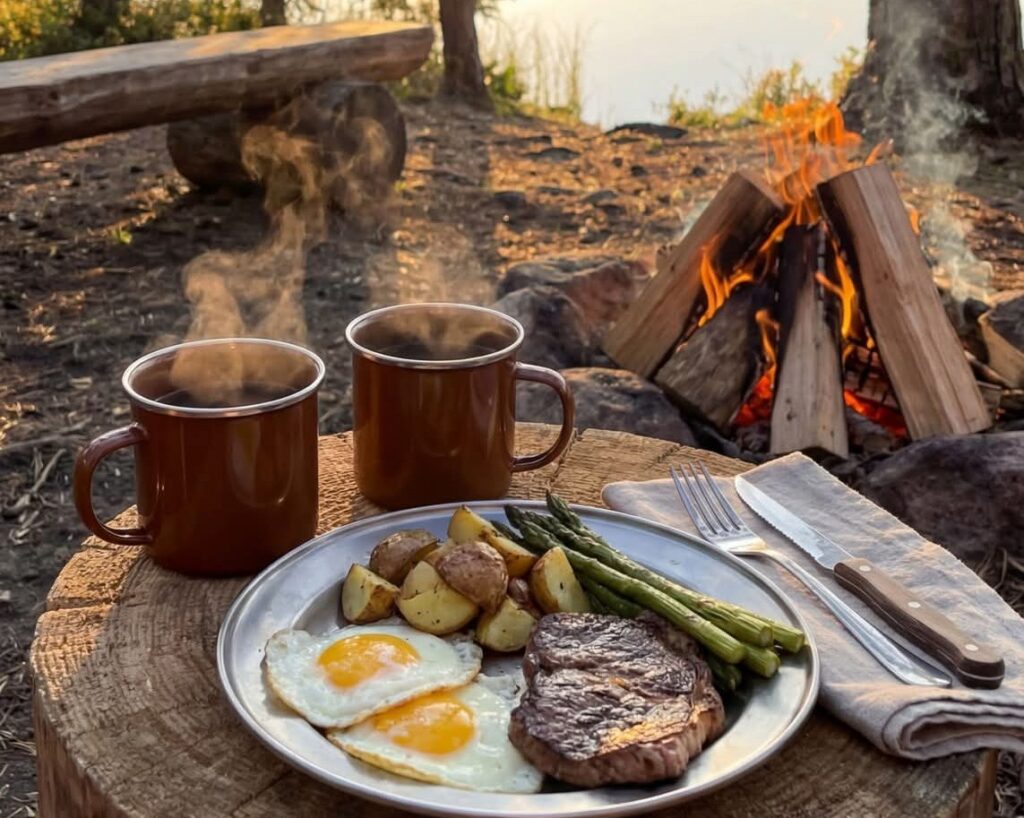
If your campground allows fires and you’re in the mood for it, cooking over an open flame is genuinely fun. A cast iron skillet, a grill grate, and heat-resistant gloves are the essentials. Burgers, foil packet dinners, and marshmallows are classics for good reason. That said, don’t rely on fire as your only cooking method — weather happens, and fire bans are increasingly common in dry seasons.
If you’re cooking for a family, you might want to try a swivel grill which provides more cooking space and moves in and out of the fire as needed. Here are a few swivel grills that we really like.
Camp Coffee
If you have kids, you already know that your ability to function in the morning is non-negotiable. Whether you prefer a French press, a pour-over cone, or a percolator, bring the setup that makes you happy. Happy parents make for a much better camping experience for everyone.
Food Storage and Organization
Keeping food organized prevents two problems: the frustration of digging through bags looking for the salt, and the more serious issue of attracting wildlife overnight. Clear plastic bins, zip-top bags, aluminum foil, and a good supply of garbage bags go a long way. In some parks you’ll need to use designated food storage lockers overnight, so check the rules before you go.
The Small Stuff That Matters
A lighter and backup matches (waterproof ones), a meat thermometer, aluminum foil, a first aid kit, paper plates as a backup, and a headlamp for cooking after dark. Seriously — trying to flip pancakes in the pitch black is not a good time.
A Simple Family Setup That Actually Works
You don’t need a checklist with 47 items. Here’s a realistic, minimal setup that covers everything:
Your cooking zone is a 2-burner propane stove, a frying pan, a pot, and a cutting board with a knife. Your food storage is two coolers and a dry goods bin. Your cleanup station is two wash bins, soap, a sponge, and a drying towel.
That’s it. Set up time at the campsite: 10 to 15 minutes.
Common Mistakes Worth Avoiding
The biggest mistake new camping families make is overcomplicating meals. Camp food doesn’t need to be fancy — tacos, pasta, hot dogs, breakfast sandwiches, and foil packet dinners are crowd-pleasers for a reason. Prep ingredients at home when you can, keep meals simple, and don’t underestimate the value of wind protection for your stove.
The second biggest mistake is not organizing gear into categories before you leave. The bin system — one for cooking tools, one for dry food, and separate coolers for drinks and perishables — transforms chaotic meal times into something you might actually enjoy.
Start Simple, Build From There
You don’t need the most elaborate camp kitchen setup. You need one that packs easily, sets up in minutes, and feeds your family without added stress. Start with the essentials, and as you camp more you’ll naturally figure out what’s missing and what you never actually use.
The best gear is the gear that gets you outside and keeps you there.
Frequently Asked Questions: Tent Camping Cooking Gear
1. What cooking gear do I really need for tent camping?
For basic tent camping, you only need a portable camp stove, fuel, lighter or matches, one pot, one pan, cooking utensils, cooler with ice packs, cutting board, knife, and biodegradable soap. Families may also want a coffee maker, larger cookware, and a folding camp table for prep space.
2. Is a camp stove better than cooking over a fire?
Yes, for most families a camp stove is more reliable and safer. Campfires can be affected by wind, rain, or fire bans. A stove like the Coleman Classic Propane Stove provides consistent heat and faster cooking times, making it ideal for busy campers.
3. How many pots and pans do you need for camping?
Most families can manage with:
- 1 medium pot (for pasta, boiling water)
- 1 skillet (for breakfast and one-pan meals)
Minimalist campers may prefer nesting cookware sets from brands like GSI Outdoors to save space.
4. Do you need special cookware for camping?
Not necessarily. You can bring cookware from home, but camping-specific gear is lighter, more compact, and easier to clean. Aluminum or stainless steel cookware designed for outdoor use performs better on portable stoves.
5. How do you keep food cold while tent camping?
Use a high-quality cooler with block ice or reusable ice packs. Premium coolers like YETI hold ice longer, but budget coolers work well for weekend trips if pre-chilled and kept in the shade.
6. What utensils should you pack for camp cooking?
Essential utensils include:
- Tongs
- Spatula
- Sharp knife
- Cutting board
- Serving spoon
- Can opener
For families, bringing duplicates can prevent mealtime frustration.
7. How do you wash dishes while tent camping?
Bring:
- Two bins (wash and rinse)
- Biodegradable soap
- Sponge or scrubber
- Microfiber towel
Always dispose of greywater according to campground rules, especially in provincial or national parks.
8. Do I need a camp kitchen table?
A folding camp kitchen table isn’t mandatory but makes meal prep much easier, especially for families. It keeps food off the picnic table and improves organization.
9. What’s the best fuel for a camping stove?
Propane is the most common and convenient fuel for family camping. It’s easy to find, burns clean, and works well with most two-burner stoves. Always pack extra fuel in case of longer cook times.
10. What cooking gear can I skip for a short camping trip?
For a 1–2 night trip, you can skip:
- Dutch oven
- Coffee press (if you use instant coffee)
- Full dish sets (use reusable lightweight plates)
- Large prep stations
Keep your setup simple and focus on one-pot or foil-packet meals.
11. Is cast iron good for tent camping?
Cast iron is excellent for campfire cooking because it retains heat well and adds flavor. However, it’s heavy and requires maintenance. It’s best for car camping rather than hike-in tent camping.
12. How do I organize my camp kitchen efficiently?
Use clear storage bins labeled:
- Cooking gear
- Dry food
- Snacks
- Cleaning supplies
Keeping your kitchen gear separate from tent gear speeds up setup and teardown.
13. Is tent camping and car camping the same thing?
While these styles of camping are similar in that they both often mean sleeping in a tent, car camping refers to sleeping in a tent with your car being very accessible/close by.