


Choosing the right family camping tent can make or break a camping trip. When you’re camping with kids, comfort, space, safety, and ease of setup matter just as much as durability and weather protection. A tent that’s too small, hard to pitch, or leaks during a storm can turn an exciting adventure into a stressful weekend.
This complete guide breaks down everything you need to know before buying a family camping tent—from sizing and seasonal ratings to materials, setup, pricing, and family-specific safety considerations. Whether you’re planning your first family camping trip or upgrading to a better tent, this guide will help you make a confident, informed decision.
What Defines a Family Camping Tent?
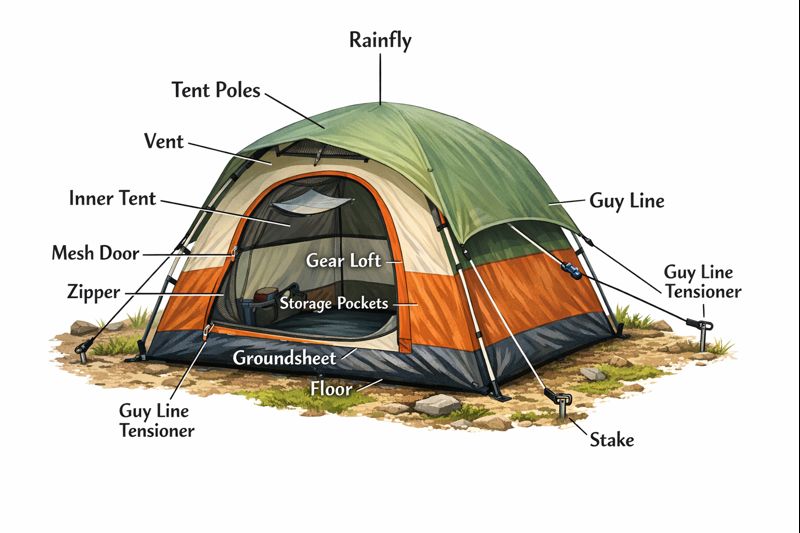
A family camping tent is designed to comfortably accommodate multiple people—typically four or more—while prioritizing livability, durability, and ease of use. Unlike backpacking tents, which focus on low weight and compact size, family camping tents are built for car camping, where space and comfort matter more than portability.
Key characteristics of family camping tents include:
- Larger floor space and peak height for standing and moving around
- Multiple rooms or dividers for privacy
- Large doors and windows for ventilation and easy entry
- Stronger poles and fabrics to handle longer stays
- Simple setup systems like color-coded poles or instant frames
Family tents are designed for real-life camping—kids going in and out, gear spread across the floor, and unpredictable weather.
Tent Sizes & Capacity Explained
Tent size is one of the most misunderstood aspects of buying a family camping tent. Manufacturer capacity ratings (4-person, 6-person, 8-person) assume a tight fit with sleeping bags and no extra gear.
How to Choose the Right Size
A good rule of thumb for family camping:
- Add 2 people to your actual group size
- Or double the number of adults, then add kids
For example:
- Family of 4 → look for a 6–8 person tent
- Family of 5–6 → consider an 8–10 person tent
Floor Space & Standing Height
Look beyond capacity and check:
- Floor dimensions (square footage matters more than labels)
- Center height (6 ft or taller is ideal for families)
- Room layouts (single large room vs multiple rooms)
Larger tents offer space for air mattresses, play areas for kids, and room to store gear during bad weather.
Seasonal Ratings: 3-Season vs 4-Season Tents
Most family camping tents fall into the 3-season category, which is ideal for spring, summer, and fall camping.
3-Season Family Camping Tents
Best for most families, these tents are designed for:
- Rain and wind
- Warm temperatures
- Mild cold conditions
They offer good ventilation and lightweight materials while still providing weather protection.
4-Season Tents
4-season tents are built for:
- Heavy snow
- Strong winds
- Cold temperatures
However, they’re usually:
- More expensive
- Heavier
- Poorly ventilated for summer use
For most families, a high-quality 3-season tent is the best choice, even in Canada and the northern States.
Materials, Durability, and Waterproofing
The materials used in a family camping tent directly affect its lifespan, weather resistance, and comfort.
Tent Fabrics
- Polyester – Common, UV resistant, affordable
- Nylon – Lightweight and strong but can stretch when wet
Waterproof Ratings
Look for:
- Rainfly with full coverage
- Sealed or taped seams
- Waterproof ratings of 1,500–3,000 mm for rain protection
A bathtub-style floor with raised edges helps prevent water from seeping in during storms.
Poles
- Fiberglass poles – Affordable but less durable
- Aluminum poles – Stronger, lighter, and more reliable
For family use, durability often matters more than weight.
Ease of Setup (A Huge Factor for Families)
When you’re setting up camp with kids around, ease of setup is critical. A complicated tent can be frustrating after a long drive or in bad weather.
Features That Make Setup Easier
- Color-coded poles
- Hub-style pole systems
- Pre-attached poles
- Instant or pop-up frames
- Clear instructions and labeled components
Many modern family camping tents can be set up in 10–15 minutes by one or two adults.
Easy Setup Family Camping Tents
Price Ranges: What Should You Expect to Pay?
Family camping tents come in a wide range of prices from multiple brands. Knowing what to expect helps you balance budget and quality.
Budget ($100–$200)
- Basic weather protection
- Smaller floor space
- Heavier materials
- Best for occasional campers
Mid-Range ($200–$400)
- Better waterproofing
- Larger layouts and higher ceilings
- More durable poles and fabrics
- Ideal for most families
Premium ($400+)
- Superior materials and construction
- Spacious multi-room designs
- Excellent ventilation and weather resistance
- Best for frequent campers
For most families, mid-range tents offer the best value.
Safety & Comfort Considerations for Families
Family camping tents should prioritize more than just size.
Ventilation & Airflow
- Multiple windows and mesh panels reduce condensation
- Proper airflow improves sleep quality
Zippers & Doors
- Smooth, durable zippers
- Large doors for easy entry with kids
Interior Storage
- Gear lofts and pockets keep floors clear
- Reduces tripping hazards
Visibility & Supervision
- Mesh panels allow parents to see kids
- Dividers provide privacy without isolation
Weather Safety
- Strong guy-out points
- Stable pole structures
- Secure rainfly attachment
Comfort and safety go hand in hand—especially on longer trips.
Final Thoughts: Choosing the Right Family Camping Tent
The best family camping tent is one that fits your family’s size, camping style, and budget while offering enough space, comfort, and protection to enjoy the outdoors together. Focus on realistic capacity, durable materials, simple setup, and family-friendly features.
As you narrow down your options, use this guide as your foundation—and explore detailed reviews, comparisons, and setup guides to find the perfect tent for your next family adventure.