
Few things can make or break a family camping trip faster than sleep. When everyone wakes up cold, stiff, or cranky, even the most beautiful campsite loses its magic. The good news? Most camping sleep problems aren’t caused by the tent — they’re caused by a poorly planned sleeping system.
A family tent camping sleeping system isn’t just a sleeping bag tossed on the ground. It’s a thoughtful combination of pads, mattresses, cots, insulation, and bedding that works together to keep every family member — from toddlers to grandparents — warm, supported, and comfortable.
In this guide, we’ll break down what actually works for every age, how sleep needs change as kids grow, and how to build a flexible sleeping setup that keeps the whole family rested and ready for adventure.
What Is a Family Tent Camping Sleeping System?
A sleeping system is the complete setup that separates your body from the cold, hard ground while regulating temperature and providing support. For families, this system needs to be adaptable — because no two sleepers are the same.
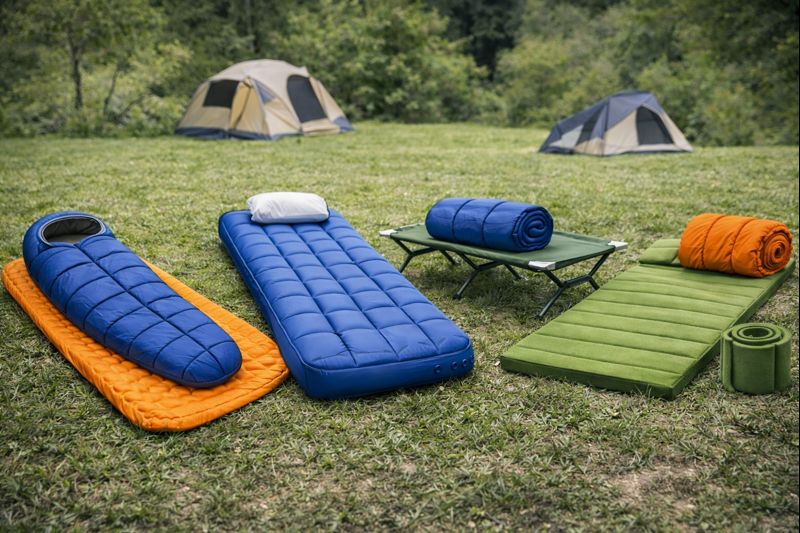
A complete tent camping sleeping system usually includes:
- Ground insulation (sleeping pad, air mattress, or cot)
- Primary bedding (sleeping bag or blankets)
- Pillow solution (camping pillow or home pillow)
- Temperature layers (liners, extra blankets, insulated rugs)
- Tent floor protection (footprints, rugs, foam tiles)
The key difference between a solo camper and a family? One-size-fits-all does not work. Kids sleep colder, adults need more support, and older campers often need height and ease of movement.
Key Factors When Choosing Sleeping Systems for Families
Before diving into age-specific recommendations, it helps to understand the variables that affect comfort for everyone.
1. Ground Insulation Matters More Than the Sleeping Bag
Cold travels up from the ground. Even a high-quality sleeping bag won’t help if there’s no insulation underneath. This is why pad thickness and R-value are critical for families.
If you’re waking up cold every morning while camping, there could be a few reasons. We explain them all in this write up about Why You’re Always Cold While Tent Camping? (And What Actually Helps)
2. Comfort vs Portability
Most family tent camping is car camping, not backpacking. That means you can prioritize:
- Thicker pads
- Larger air mattresses
- Full-size cots
- Real pillows and blankets
3. Tent Size and Floor Space
Your sleeping system should match your tent’s layout. Crowding large mattresses into a small tent almost always leads to poor sleep and frustration.
4. Ease of Setup
When camping with kids, simple setups win. Fewer valves, fewer pieces, and faster inflation matter — especially at bedtime.
Best Sleeping Systems for Babies & Toddlers (0–3 Years)
Camping with babies and toddlers requires a safety-first approach. Comfort is important, but stability and temperature control matter most.
What Matters Most at This Age
- Flat, firm sleeping surfaces
- Temperature regulation
- Proximity to parents
- Limited movement during sleep
Best Sleeping Options
- Pack-and-play or travel cribs inside the tent
These provide a familiar, safe sleep space and keep little ones off the cold ground. - Foam pads under travel cribs
Adds insulation without compromising safety. - Parent-shared sleep setups (when appropriate and safe)
What to Avoid
- Thick air mattresses (instability risk)
- Adult sleeping bags
- Elevated cots without railings
💡 Tip: Dress toddlers in layered sleepwear rather than relying on heavy bedding.
Best Sleeping Systems for Young Kids (4–8 Years)
This is the sweet spot for camping — kids are excited, adaptable, and sleep deeply when comfortable.
Sleep Needs at This Age
- Warmth and cushioning
- Familiar bedding feel
- Enough space to move without rolling off
Best Sleeping Systems
- Closed-cell foam pads + kids sleeping bags
Durable, warm, and nearly indestructible. - Low-profile air mattresses
Offer more cushion while staying stable. - Double-wide family sleeping pads
Great for siblings who like sleeping close together.
Pro Tip for Parents
Use the same sleeping bag and pad setup at home for a “camping sleepover” before your trip. Familiarity reduces nighttime wakeups.
Best Sleeping Systems for Older Kids & Teens (9–16 Years)
As kids grow, their comfort expectations grow with them — and complaints increase if sleep quality drops.
What Changes at This Stage
- Larger body size
- More movement during sleep
- Greater sensitivity to temperature
- Desire for personal space
Recommended Sleeping Systems
- Adult-sized sleeping pads with youth sleeping bags
- Individual air mattresses rather than shared systems
- Hybrid systems (foam pad + inflatable topper)
Teens tend to sleep warmer than younger kids, so focus on support and space rather than excessive insulation.
Best Sleeping Systems for Adults & Parents
This is where most family camping sleep problems show up. Parents sacrifice comfort — then regret it by morning.
Common Adult Sleep Issues While Camping
- Lower back pain
- Hip pressure points
- Feeling cold from below
- Narrow sleeping pads
Best Adult Sleeping System Options
- Thick insulated sleeping pads (3–4+ inches)
Best balance of support and warmth. - Camping cots paired with pads
Excellent for back pain and easy entry/exit. - Double sleeping systems for couples
Reduces drafts and improves comfort.
💡 Rule of thumb: If you wouldn’t sleep on it at home, don’t expect it to feel good after a full day outdoors.
Sleeping Systems for Seniors & Grandparents
This group is often overlooked — but when seniors sleep well, they enjoy the trip far more.
Key Comfort Needs
- Ease of getting in and out of bed
- Joint and back support
- Warmth without overheating
Best Sleeping Solutions
- Raised camping cots
Provide chair-height entry and excellent airflow. - Memory foam camping pads
Reduce pressure points. - Cot + insulated pad combos
Best overall comfort for older campers.
Avoid low-profile pads that require standing up from the ground — they’re uncomfortable and risky.
How to Combine Sleeping Systems in One Family Tent
This is where thoughtful planning makes a huge difference.
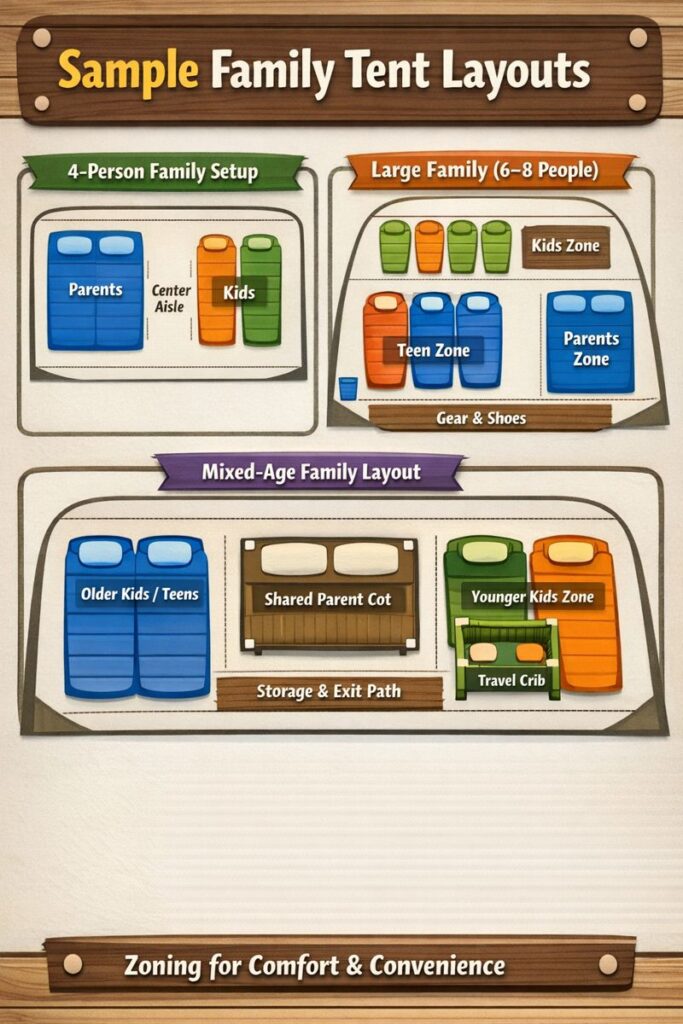
Sample Family Layouts
4-Person Family
- Parents: double pad or cot system
- Kids: individual foam pads or air mattresses
- Shared center aisle for movement
Large Families (6–8 People)
- Zone by age
- Group younger kids together
- Keep adults near tent doors for nighttime exits
Floor Planning Tips
- Use rugs or foam tiles to reduce noise and cold
- Place heavier sleepers near tent poles for stability
- Keep shoes and gear away from sleep zones
Seasonal Adjustments for Family Sleeping Comfort
Summer Camping
- Breathable pads
- Lighter sleeping bags or sheets
- Open ventilation
- Avoid vinyl air mattresses that trap heat
Fall & Cold-Weather Camping
- Stack insulation (foam pad + inflatable)
- Use higher R-value pads
- Add insulated rugs under sleeping areas
- Layer bags instead of buying extreme cold gear
Wondering how to choose the best sleeping bag for each season? Check out this guide on temperature ratings for sleeping bags: Sleeping Bag Temperature Ratings Explained for Families
Common Family Camping Sleep Mistakes (and How to Fix Them)
Mistake: Relying only on sleeping bag ratings
Fix: Upgrade ground insulation first
Mistake: Buying cheap air mattresses
Fix: Choose camping-specific mattresses designed for cold ground
Mistake: Skipping pillows
Fix: Bring real pillows or quality camping versions
Mistake: Trying new gear for the first time at camp
Fix: Test setups at home
Recommended Family Tent Camping Sleeping Systems (By Category)
While every family is different, these categories help narrow choices:
- Best Overall Family Sleeping System: Thick insulated pads + season-appropriate sleeping bags
- Best Budget Setup: Foam pads + rectangular bags
- Best Premium Comfort Setup: Cot + insulated pad + quality bag
- Best Mixed-Age Solution: Modular pads that can be combined or separated
Choosing systems that grow with your kids saves money long-term.
Frequently Asked Questions
Can kids sleep on air mattresses while camping?
Yes, as long as they’re low-profile, stable, and paired with insulation underneath.
Are camping cots safe for children?
Yes for older kids, but younger children should use ground-based systems.
How thick should a sleeping pad be for adults?
At least 3 inches for side sleepers and anyone with back pain.
What’s the most comfortable family camping setup?
A mix of cots, thick pads, and age-appropriate sleeping bags tailored to each sleeper.
Final Thoughts: Comfort Makes Better Camping Memories
The best family tent camping sleeping system isn’t the most expensive one — it’s the one that matches each person’s age, body, and sleep style. When everyone sleeps well, mornings are happier, patience lasts longer, and the trip becomes something your family wants to repeat.
Start simple, upgrade gradually, and remember: great camping days start with great camping nights.
What are the 12 must-haves for a family tent camping trip?