
If there’s one thing that determines whether a camping trip feels restorative or miserable, it’s sleep.
Not food.
Not weather.
Not even the campground.
Sleep!!
We’ve learned this the hard way—through groggy mornings, sore backs, cranky moods, and trips where we came home more tired than when we left. When you’re already busy and worn down before you even pack the car, bad sleep can ruin the entire experience.
This article is about how we actually sleep well while camping, whether we’re tent camping or sleeping in our RV. Not the idealized version. Not the “you’ll get used to it” advice. The real, practical systems we use so we can enjoy lake days, campfires, and slow mornings instead of counting down until we get home.
If you’ve ever thought:
- “Camping would be great if I could just sleep”
- “I’m too tired for miserable nights”
- “I love the days but dread bedtime”
You’re not alone—and this is exactly why we camp the way we do now.
Why Sleep Is Non-Negotiable for Us
We’re a busy family. That means when we camp, we’re usually already tired and looking for relaxation.
Camping isn’t an escape from exhaustion unless sleep is part of the equation. We don’t have the energy to “push through” bad nights anymore, and honestly, we don’t think anyone should have to either.
Good sleep while camping allows us to:
- enjoy early mornings by the lake
- stay patient and relaxed
- actually rest instead of recover afterward
- camp more often throughout the season
Once we accepted that sleep mattered more than tradition or aesthetics, everything changed.
The Biggest Sleep Mistake We Used to Make
For a long time, we treated bad sleep like something you just deal with when camping.
We focused our attention on getting good:
- tents
- cooking gear
- activities
- packing lists
And we’d just bring the typical sleeping bag to throw in the bottom of the tent for sleeping.
What we learned is this: sleep systems deserve just as much thought as everything else—if not more.
Camping sleep fails usually come down to one (or more) of these:
- sleeping on something too thin or uneven (so you feel every rock and stick beneath you)
- temperature mismanagement (allows cold to migrate through)
- bad pillows (causes headaches and neck pain)
- noise and light issues
- too much effort at bedtime
Fixing sleep doesn’t require luxury—it requires intention.
Tent Camping vs RV Sleeping: What’s Actually Different
We camp both ways, and the sleep experience is very different depending on whether we’re in a tent or our trailer.
Sleeping in a Tent: What Matters Most
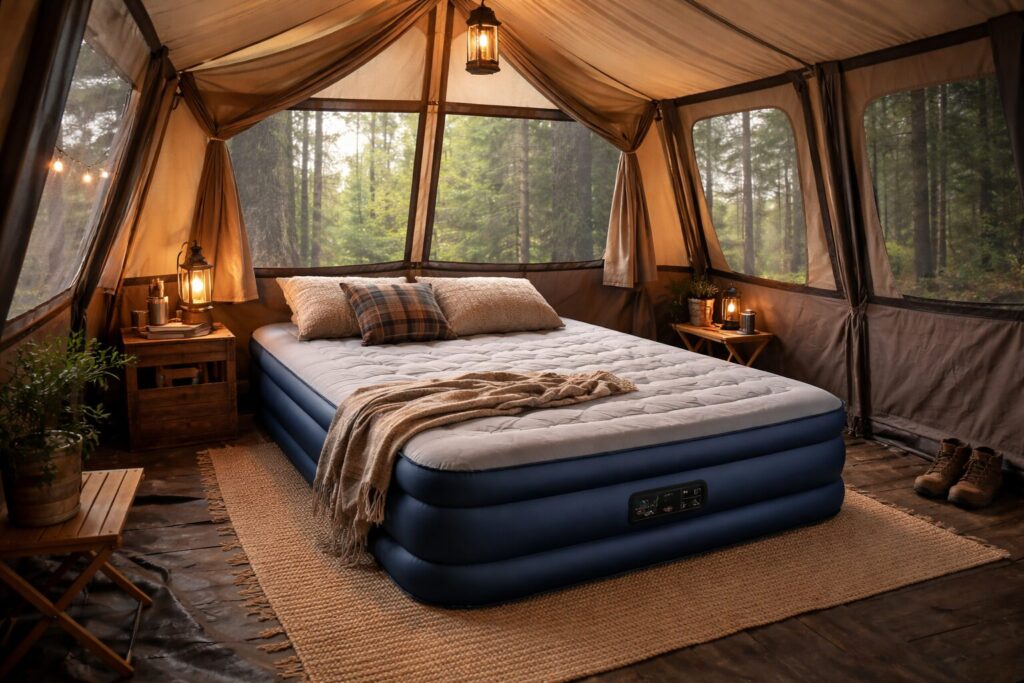
Tent camping can absolutely be comfortable—but only if you stop pretending the ground is a mattress.
For us, good tent sleep comes down to four things:
1. The Sleep Surface (This Is Everything)
We no longer use basic foam pads or thin air mattresses that offer little support. We want:
- insulation from the ground
- enough cushioning for hips and shoulders
- stability (no bouncing all night)
A good sleeping pad or mattress-style setup is the foundation. If this fails, nothing else matters.
2. Real Bedding, Not “Camping” Bedding
We bring:
- real sheets or sheet-style liners when using an air mattress
- blankets appropriate for the season
- sleeping bags only when they actually make sense or for extra warmth
Check out our guide for a list of the most comfortable sleeping bags for kids and what too look for.
The goal is familiarity. When your body recognizes bedtime routines, sleep comes easier—even in a tent.
3. Temperature Control
Most bad camping sleep is temperature-related.
We plan for:
- cold ground at night
- early morning chill
- warm evenings that turn cold
Depending on the season, that might mean:
- insulated pads
- extra blankets
- fans for airflow
- venting strategies
Being too hot or too cold will wake you up faster than almost anything else.
Every sleeping bag has a temperature rating. If you need help understanding sleeping bag temperature ratings and when to use them, see our guide on Sleeping Bag Temperature Ratings Explained
If you’re constantly cold while trying to sleep, we just might have the answer for you in Why You’re Always Cold While Tent Camping? (And What Actually Helps)
4. Simplicity at Bedtime
If setting up for bed feels like work, it adds friction.
We want:
- fast setup
- minimal adjustments
- no inflating at midnight if possible
The easier bedtime is, the more likely we are to actually relax.
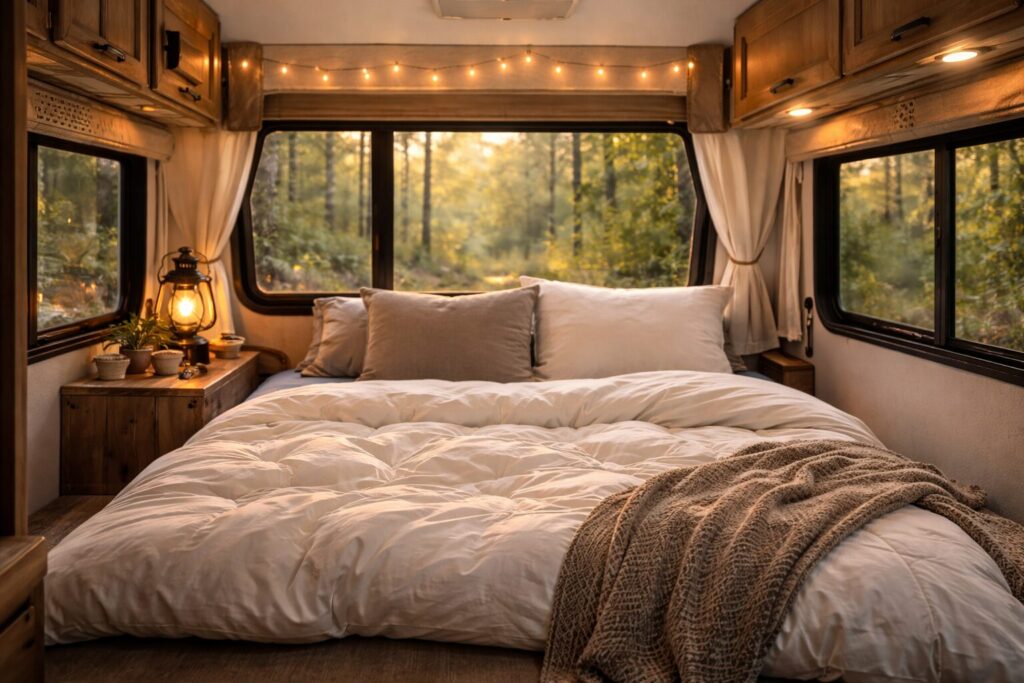
Sleeping in the RV: Why It’s a Game-Changer When We’re Tired
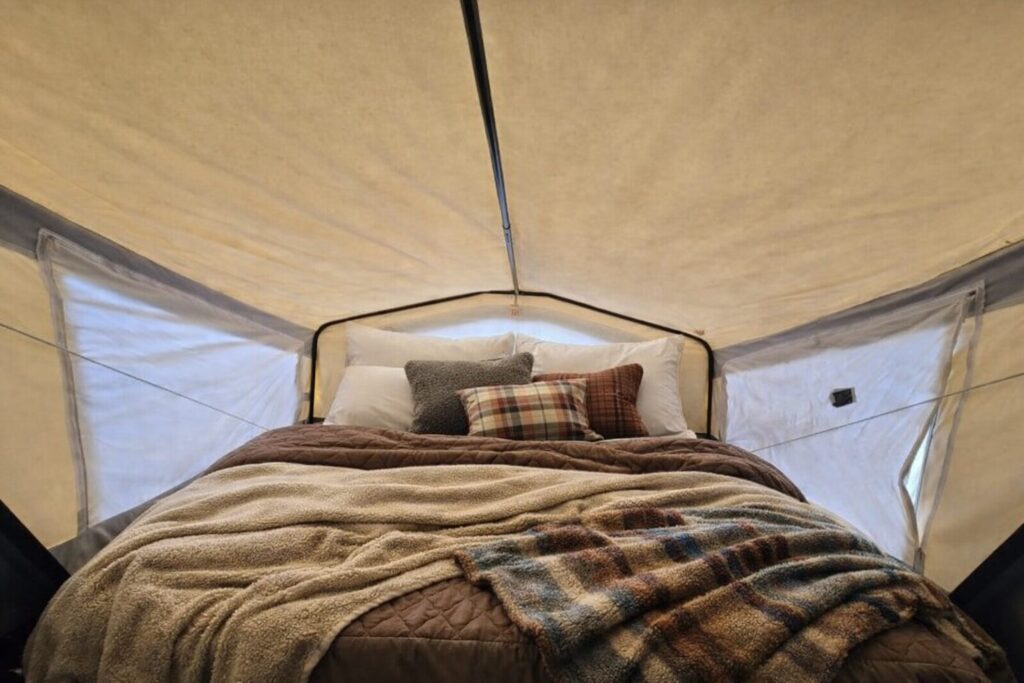
RV sleep is where we lean heavily into comfort—and without guilt.
Sleeping in the trailer at night means:
- real mattresses
- consistent temperature
- fewer external noises
- quicker bedtime routines
But RV mattresses are not automatically comfortable. Most factory mattresses are just okay at best. Ours was terribly uncomfortable and I woke up with sore shoulders almost every morning. Here’s what we’ve done to make our RV mattress more comfortable.
What Actually Improves RV Sleep
For us, that means:
- a quality mattress topper
- familiar pillows from home
- breathable bedding
- airflow management
We’re not trying to recreate our house—we’re trying to avoid tossing and turning all night.
RV sleep lets us:
- stay out later at the campfire
- wake up rested
- enjoy longer trips
When life is especially busy, RV sleep is often the reason we choose that option.
Pillows: The Most Underrated Camping Sleep Upgrade
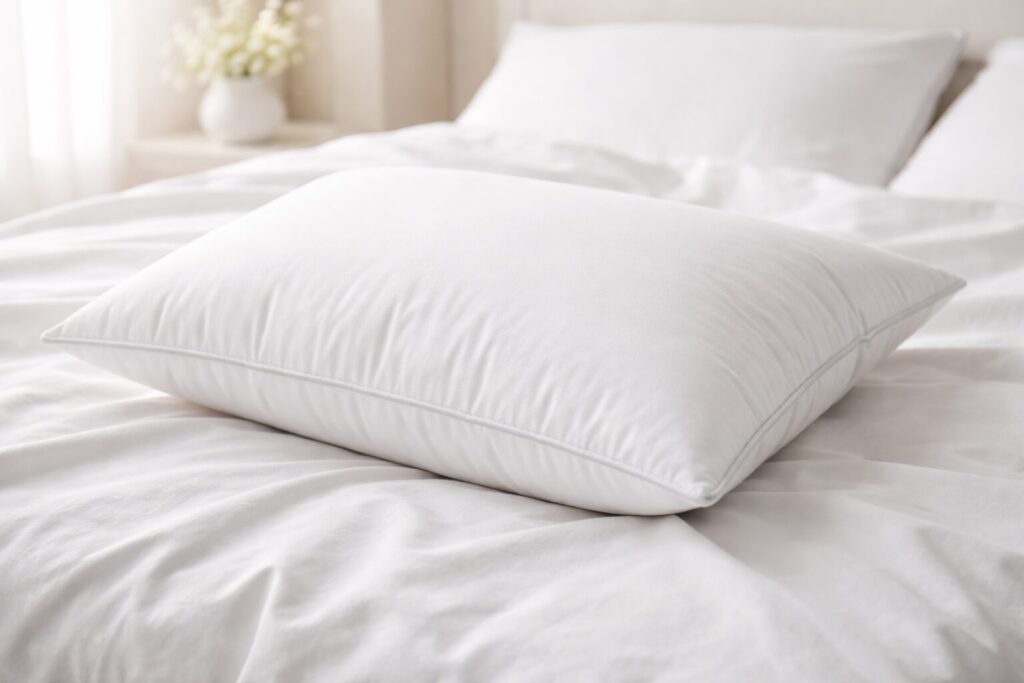
If there’s one thing we never compromise on, it’s pillows.
Bad pillows = bad sleep. Period.
We’ve tried:
- inflatable pillows
- compressible camping pillows
- “close enough” substitutes
And for us, nothing beats:
- bringing our own pillows
- or using camping pillows that truly mimic home comfort
Yes, they take up space.
Yes, they’re worth it.
This is especially true for side sleepers and anyone with neck or shoulder issues.
Managing Temperature While Camping (The Real Challenge)
Temperature is the number one reason people wake up miserable while camping.
Here’s what we plan for:
Staying Warm at Night
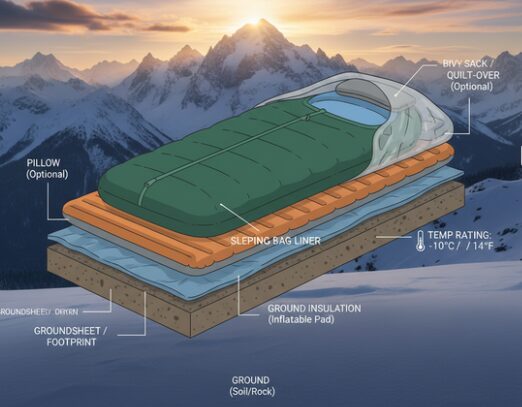
- insulating from the ground
- layering bedding
- wearing warm sleep clothes
- blocking drafts
Cold creeps up from below, not above. That’s why the sleep surface matters so much.
Staying Cool When It’s Warm
- breathable sheets
- fans (tent or RV)
- strategic venting
- minimal bedding
Overheating leads to restless sleep and early wake-ups. We’d rather be slightly cool than too warm.
Noise, Light, and Campground Reality
Campgrounds aren’t silent. People talk, kids run, cars drive by, and generators hum.
We don’t fight reality—we plan for it.
Things that help:
- choosing campsites thoughtfully
- white noise (fan noise counts)
- soft lighting instead of harsh lanterns
- consistent bedtime cues
Sleeping well isn’t about silence—it’s about predictability.
Our Camping Bedtime Routine (Yes, We Have One)
We treat bedtime while camping like bedtime at home—just simpler.
Our routine usually looks like:
- Light cleanup before dark
- Changing into sleep clothes early
- Setting up bedding before we’re exhausted
- Dimming lights and slowing down
- One last check for temperature comfort
This prevents the “why are we still setting up at 11pm” problem.
Camping should wind you down, not wire you up.
What We’ve Stopped Doing (And Why)
Over time, we’ve stopped:
- sleeping directly on the ground
- using one-size-fits-all sleep gear
- underestimating nighttime temperatures
- sacrificing comfort “just because”
We’ve learned that good sleep makes every other part of camping better—from moods to meals to motivation.
Tent vs RV Sleep: How We Decide
We ask ourselves:
- How tired are we already?
- How many nights is this trip?
- What’s the weather forecast?
- Do we need guaranteed rest?
If sleep needs to be effortless, we lean RV.
If conditions are right and energy is good, tent camping works beautifully.
There’s no moral superiority here—just honest self-assessment.
Our Philosophy on Camping Sleep Gear
We believe:
- sleep gear is worth investing in
- value matters more than price
- fewer, better items beat piles of stuff
- comfort enables more camping
We don’t chase trends. We stick with what works.
Anything we recommend on this blog is something we:
- use ourselves
- would buy again
- feel comfortable recommending to other busy families
Final Thoughts: Why Sleep Is the Key to Loving Camping Long-Term
Camping didn’t become more enjoyable for us because we got better tents or cooler gear.
It became more enjoyable when we finally slept well.
Good sleep means:
- better mornings
- calmer days
- longer evenings by the fire
- memories that feel good instead of exhausting
If you’re struggling with camping sleep, you’re not doing it wrong—you just haven’t built the right system for you yet.
This blog exists to help busy, comfort-loving, budget-conscious families camp in a way that actually feels restful. Sleep is where that starts.
If you’re always tired after a camping trip, sleep could be the main reason, but not the ONLY reason. We explore some other common reasons in this Why Am I So Tired After Camping?