
If you’ve ever stood in a camping aisle staring at sleeping bag tags that say “Rated to -10°C” and thought, “Cool… but for who?” — you’re not alone.
Sleeping bag temperature ratings are one of the most misunderstood parts of family camping, and they’re also the reason someone always ends up cold, cranky, or dramatically announcing at 3 a.m. that they “didn’t sleep at all.”
Let’s fix that.
This guide explains sleeping bag temperature ratings in plain English, with family campers in mind — from toddlers to teens to adults who suddenly need more comfort than they did in their 20s.
What Sleeping Bag Temperature Ratings Actually Mean
Sleeping bag temperature ratings tell you the lowest temperature at which the bag can keep an average person alive, not necessarily comfortable.
Yes, alive.
That’s an important distinction when your goal is sleep, not survival training.
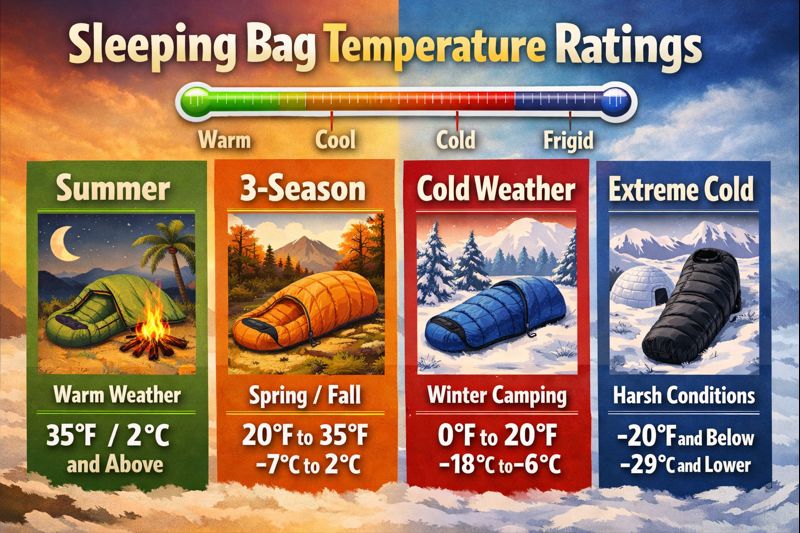
Most sleeping bags use a standardized testing system (often EN or ISO ratings) that breaks temperatures into categories:
- Comfort Rating – The temperature where an average sleeper is actually comfortable
- Lower Limit Rating – The lowest temp where a warm sleeper might still be okay
- Extreme Rating – Emergency-only, “you’ll survive but hate your life” territory
👉 For family camping, always focus on the COMFORT rating.
Ignore the extreme number unless you enjoy cold feet and regret.
Why Families Should Never Use the Lowest Temperature Rating
Here’s the thing:
Sleeping bag ratings are based on a single adult wearing thermal layers on a sleeping pad, sleeping calmly, not:
- A kid who kicks off covers
- A toddler who turns into a human windmill
- A parent who wakes up every hour listening for raccoons
In real family camping conditions:
- Kids lose heat faster
- Adults often sleep colder outdoors
- Shared tents trap some heat, but not miracles
Rule of thumb:
👉 Choose a sleeping bag rated 10–15°F (5–8°C) colder than the coldest temperature you expect.
Your future self will thank you. Possibly out loud.
Sleeping Bag Temperature Ratings for Different Ages
Sleeping Bags for Babies & Toddlers (0–4 Years)
Toddlers don’t regulate body temperature well and should never be cold while sleeping outdoors.
What to look for:
- Comfort rating warmer than expected overnight lows
- Synthetic insulation (handles moisture better)
- Room to layer pajamas or a sleep sack
Recommended approach:
If nights dip to 10°C (50°F), choose a bag rated for 0–5°C (32–41°F).
No one wants to explain hypothermia to a toddler at bedtime.
Sleeping Bag Ratings for Kids (5–10 Years)
Kids often move all night and don’t stay tucked in, even if you swear they will.
Best practice:
- Choose bags rated colder than needed
- Avoid oversized adult bags (they trap cold air)
Example:
- Expected low: 8°C (46°F)
- Choose: 0°C (32°F) comfort-rated bag
Bonus: they’ll sleep longer, and you’ll hear fewer complaints at sunrise.
Having Trouble Choosing a Sleeping Bag for your 6-10 year old in cold weather camping? Let us help you: Best Cold Weather (40–50°F) Sleeping Bags for Kids Ages 6–10
Sleeping Bags for Teens
Teens are tricky:
- One minute they’re “burning up”
- The next they’re stealing your hoodie at 2 a.m.
Tip:
- Stick close to adult ratings
- Look for bags with ventilation zips
Sweet spot:
Choose a bag rated 5–10°C colder than expected lows.
Sleeping Bag Temperature Ratings for Adults
Adults tend to sleep colder outdoors than they expect — especially after long days hiking, cooking, and parenting.
If you’re debating between two ratings:
Always go warmer.
You can unzip a warm bag.
You cannot magically warm a cold one (no matter how many socks you wear).
Warm Sleepers vs Cold Sleepers (Yes, It Matters)
Be honest with yourself.
- Cold sleeper? Add 10–15°F buffer
- Warm sleeper? Still add at least 5°F buffer
- Partner disagreement? Get separate bags — this saves marriages
What Else Affects Sleeping Bag Warmth (Besides the Rating)
Temperature ratings don’t work alone. Your sleep system matters.
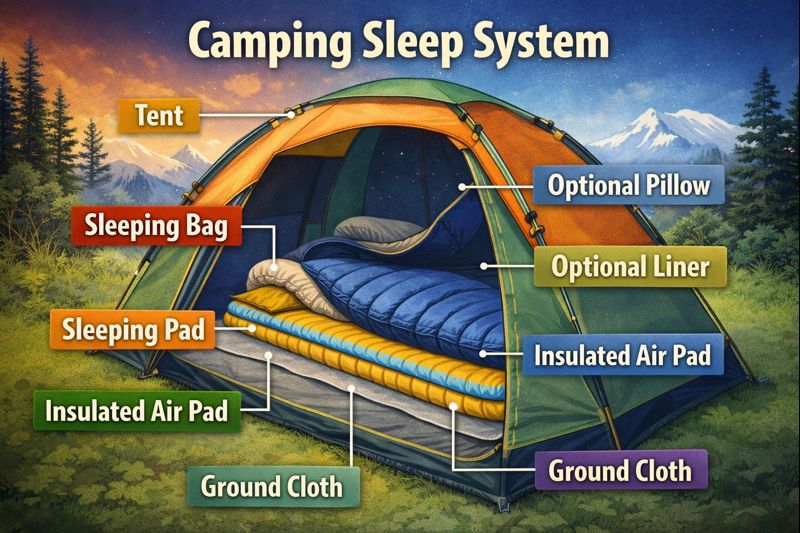
Sleeping Pad (Very Important)
No pad = cold night, even in a great bag.
- Insulation from the ground matters more than air temperature
- Look for pads with higher R-values for cooler trips
Clothing
- Dry base layers = warmer sleep
- Cotton pajamas = sadness
Tent Size
- Family tents retain some heat
- Large tents lose warmth faster than cozy ones
For a complete breakdown of how all these pieces work together, check out our family tent camping sleeping systems guide, which covers sleep setups for every age and season.
Quick Sleeping Bag Temperature Cheat Sheet for Families
| Expected Night Temp | Choose Bag Rated For |
| 15°C / 60°F | 5–10°C / 40–50°F |
| 10°C / 50°F | 0–5°C / 32–41°F |
| 5°C / 41°F | -5–0°C / 23–32°F |
| 0°C / 32°F | -10°C / 14°F |
When in doubt: go warmer.
Common Sleeping Bag Rating Mistakes Families Make
❌ Buying based on “lowest rating”
❌ Sharing one bag between kids
❌ Forgetting sleeping pads
❌ Assuming summer nights stay warm
❌ Trusting kids who say, “I won’t be cold”
They will be cold. Every time.
Final Thoughts: Comfort Beats Bragging Rights
You don’t get bonus points for camping cold.
The goal of family camping is:
- Sleep well
- Wake up happy
- Avoid mid-night tent negotiations
Understanding sleeping bag temperature ratings — and choosing comfort over numbers — makes every trip better.
For a full, age-by-age breakdown of complete family camping sleeping systems, be sure to read our main guide and sleep easier on your next trip.
Sweet dreams — and may everyone stay zipped, warm, and quiet until morning. 🏕️😴