
Cooking over a campfire is one of the best parts of camping for several reasons. It’s such a rewarding feeling making a meal outside over a campfire that you made yourself, plus the food is delicious.
But if you’re new to it, there’s a good chance your first few meals end up burnt on the outside and raw in the middle, leaving yourself and the whole family frustrated and hungry.
If your hot dogs are splitting, your pancakes are blackening, or your hamburgers are charring before they cook through, you’re not alone and there are some simple reasons for it. Campfires produce much hotter and less controlled heat than a stove or grill, which makes them easy to misuse.
The good news is that most burnt campfire meals happen because of a few common mistakes. Once you understand how campfire heat works, cooking becomes much easier.
Below are the most common reasons food burns over a campfire and simple ways to fix them.
The Most Common Reason Campfire Food Burns
The biggest mistake campers make is cooking directly over open flames instead of hot coals.
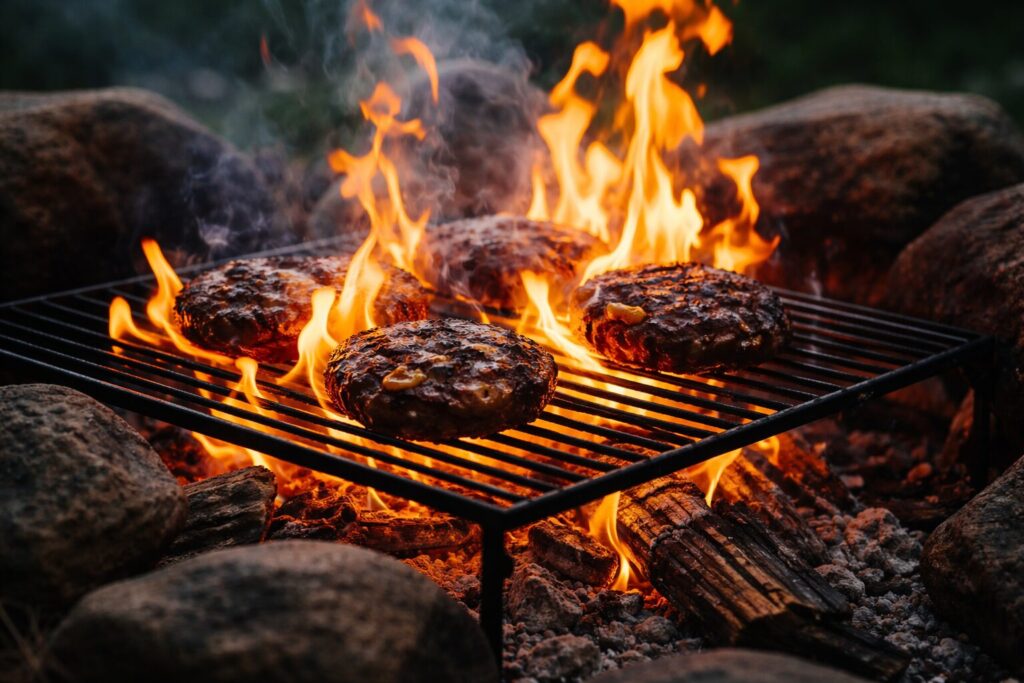
Flames are unpredictable and extremely hot. They quickly burn the outside of food while the inside stays undercooked. Think of that marshmallow that catches fire and burns to a crisp on the outside.
Experienced campers rarely cook over flames. Instead, they wait for the fire to burn down into a bed of glowing coals, which produces steady and controllable heat.
If you’re having a hard time controlling smoke from the campfire, we’ve got the solutions to help in this article: How to Stop a Smoky Campfire
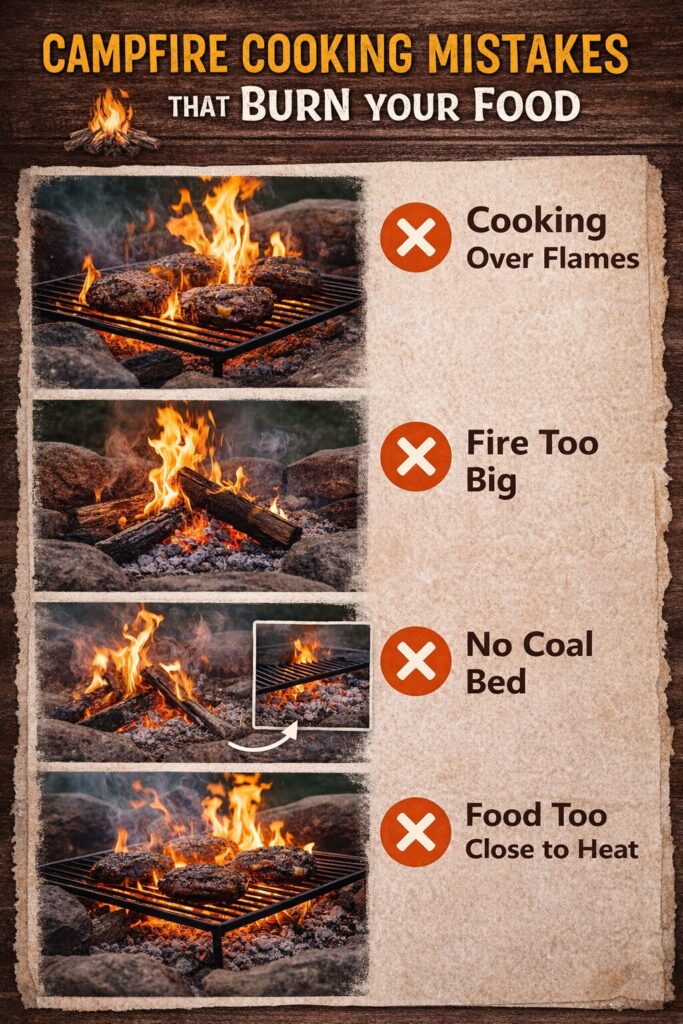
6 Reasons Your Food Burns When Cooking Over a Campfire
1. You’re Cooking Over Flames Instead of Coals
This is the number one reason campfire meals burn.
When you place food directly above flames, temperatures can exceed 1,000°F (538°C). That kind of heat will burn most foods within minutes.
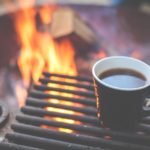
Hot coals, on the other hand, provide even, radiant heat similar to charcoal grilling.
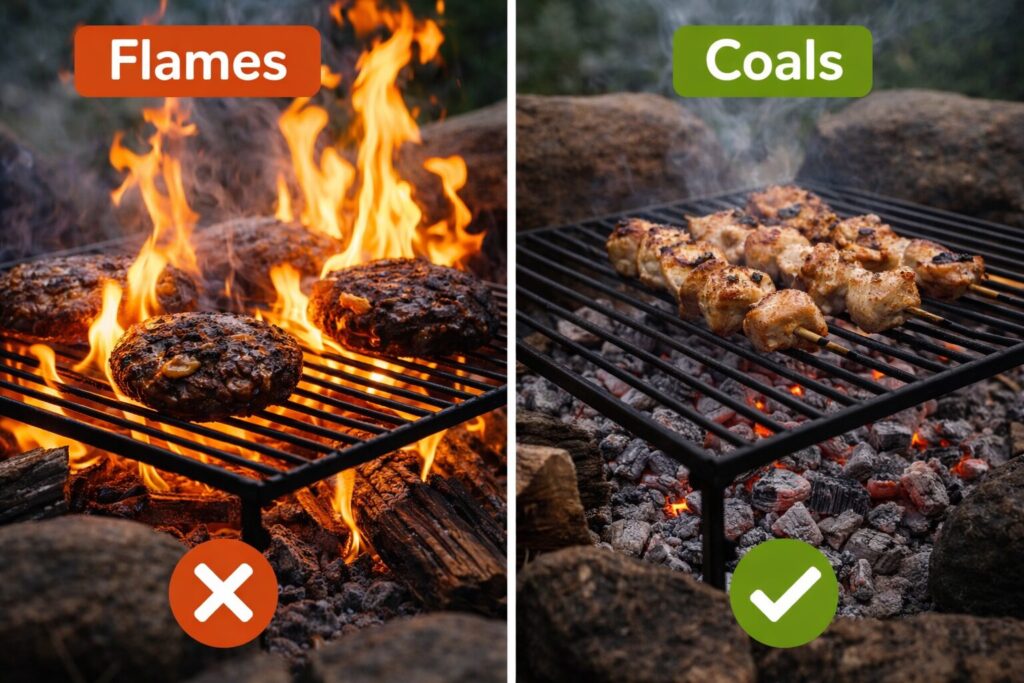
How to fix it
Wait until your fire burns down to glowing coals before cooking. This usually takes 30–45 minutes after lighting the fire. Hardwoods like maple, oak and beech produce hotter coals that last longer compared to softwoods like pine and spruce.
2. Your Campfire Is Too Big
Many campers build fires designed for warmth and atmosphere, not cooking.
Large fires produce intense heat that that is great for lighting up your campsite and staying warm on a cold night, but makes cooking difficult and often leads to burnt food.
How to fix it
Build a small, controlled cooking fire instead of a large bonfire.
A cooking fire should:
- Be about knee-height or smaller
- Produce a steady coal bed
- Allow you to manage heat easily
A smaller fire is far easier to cook over. Once the food is done and bellies are full, feel free to stock the fire to get those flames back rolling for the evening guitar session.
3. You Didn’t Let the Fire Burn Down First
Even if you build the perfect fire, cooking immediately after lighting it will almost always burn your food.
Fresh fires produce tall flames and uneven heat, which are terrible for cooking.
How to fix it
Let the fire burn until it forms a bed of glowing red coals.
This stage of the fire provides:
- steady heat
- fewer flare-ups
- better temperature control
Most experienced campers wait at least 30 minutes before cooking depending on the type of wood you are burning.
4. You’re Cooking Too Close to the Heat
Another common mistake is placing food too close to the fire.
When food sits directly above intense heat, the outside burns before the inside has time to cook.
How to fix it
Increase the distance between the fire and your food by:
- raising the cooking grate
- stacking rocks under your grill
- moving cookware to cooler areas of the fire
Even moving food a few inches higher can make a big difference.
5. You’re Using the Wrong Campfire Cookware
Thin cookware heats up extremely fast over a campfire, which can cause food to burn quickly.
Lightweight aluminum pans and cheap camping cookware often create hot spots that scorch food.
Better cookware for campfire cooking
The best options include:
- cast iron skillets
- cast iron Dutch ovens
- thick stainless steel pans
These materials distribute heat more evenly and reduce burning. The great thing about this type if cookware is that you can also bake while camping.
6. You’re Not Using Heat Zones
A campfire naturally has different temperature zones, but many campers cook directly over the hottest area.
This makes it difficult to control cooking speed.
How to fix it
Create multiple cooking zones for different types of food:
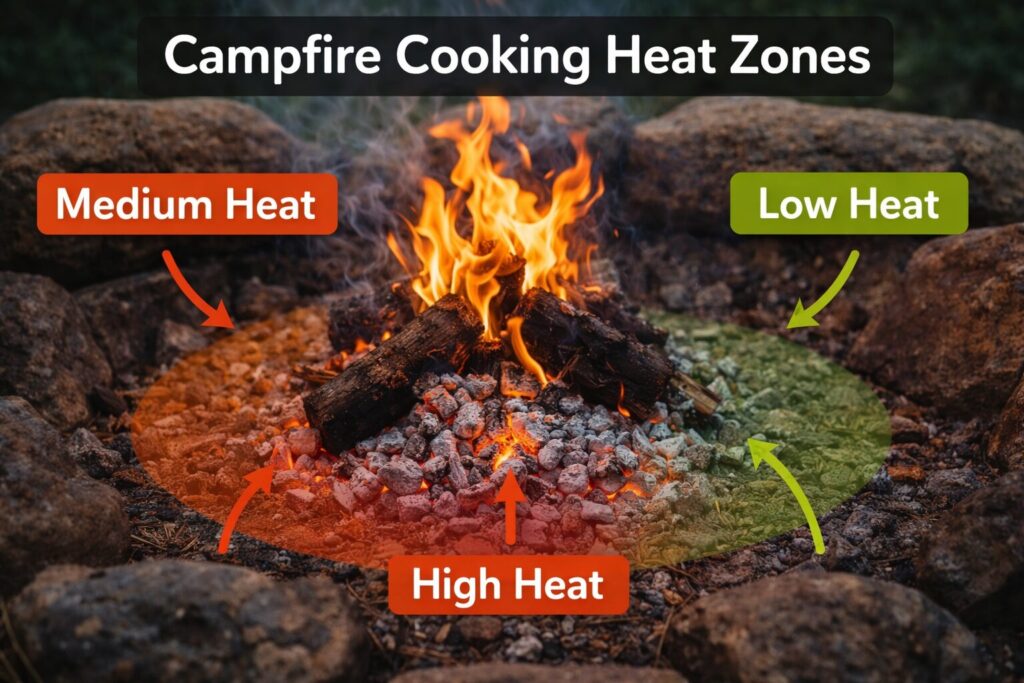
High heat zone
- directly over the hottest coals
- good for boiling water or searing food
Medium heat zone
- slightly off-center from the fire
- ideal for frying and sautéing
Low heat zone
- edge of the coal bed
- good for slow cooking or warming food
This allows you to move food around if it starts cooking too quickly. A swivel grill is also a great way to move food between different heat zones easily.
How to Stop Burning Food Over a Campfire
Once you understand campfire heat control, preventing burnt meals becomes much easier.
Here are some simple tips that we use before cooking over the campfire.
Build a good coal bed
A thick bed of glowing coals produces steady heat and prevents flare-ups.
Cook slower than you would at home
Campfire cooking works best with moderate heat and patience.
Rotate food often
Moving food around prevents hot spots from burning it. A pair of heat resistant gloves and long metal tongs work great.
Use cast iron cookware
Heavy cookware distributes heat better and helps prevent scorching when compared to stainless steel.
Use foil packets for beginners
Foil packet meals are forgiving and much harder to burn.
It isn’t always possible to cook over the campfire, in which case you’ll want to ensure that you have the right gear for cooking: Portable Camping Kitchen Setup: What You Need + Easy Organization Ideas
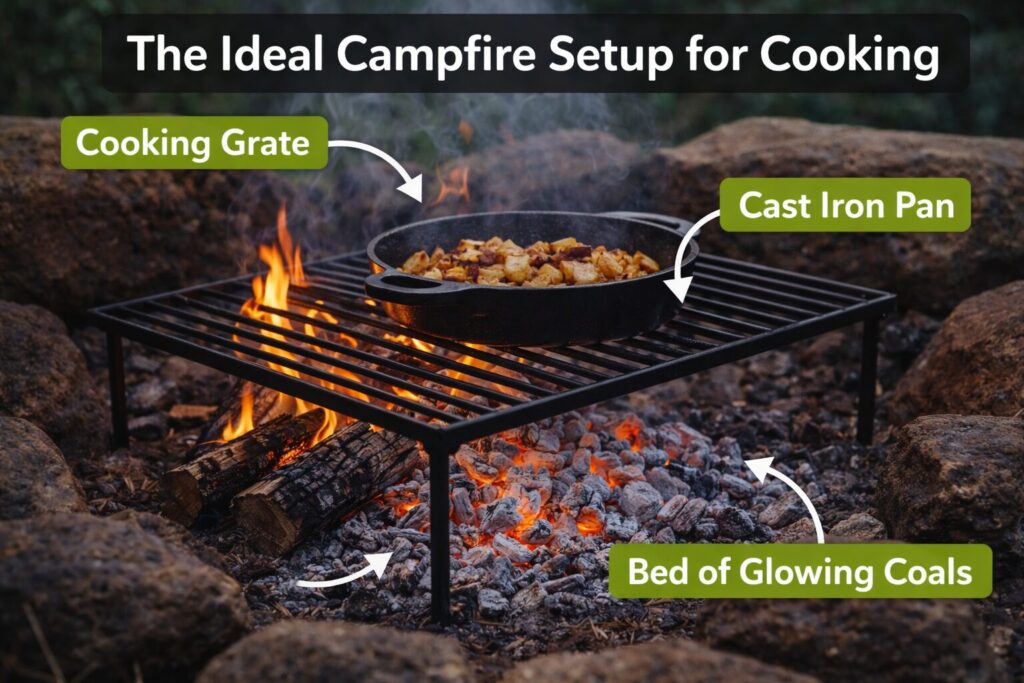
The Ideal Campfire Setup for Cooking
The best campfire for cooking looks very different from a typical campfire built for warmth.
A good cooking fire should have:
- a bed of glowing coals
- a moderate-sized fire
- a cooking grate positioned several inches above the coals
- room to move cookware around the fire
This setup gives you much more control over temperature.
Campfire Foods That Are Harder to Burn
If you’re still learning how to cook over a campfire, start with foods that tolerate heat well.
Some beginner-friendly campfire meals include:
- foil packet meals
- sausages or hot dogs
- baked potatoes
- chili or stew
- scrambled eggs in cast iron
These foods are more forgiving than delicate items like pancakes or fish.
Final Thoughts
Burnt food is one of the most common frustrations when learning to cook over a campfire. In most cases, it happens because campers cook over flames instead of coals, build fires that are too large, or place food too close to the heat.
Once you learn how to manage a coal bed and heat zones, campfire cooking becomes much easier and far more enjoyable.
With a little practice, you’ll be able to cook delicious meals outdoors without burning them.
Related posts: The Complete Guide to Camp Cooking for Families (Tent Camping & RV Cooking)
Family Tent Camping Sleeping Systems: What Works for Every Age
We love writing about the things that make a real difference in your outdoor experience. Some of the links in this post are affiliate links in which case we may earn a small commission at no extra cost to you if you make a purchase. We truly appreciate you taking the time to read our content and hope it has added value to your next camping and outdoor adventure.